Originally published in Uncut Take 339 (June 2025)
Originally published in Uncut Take 339 (June 2025)
On August 3, 1983, Prince and backing band the Revolution – with 19-year-old guitarist Wendy Melvoin making her live debut – played a benefit gig for the Minnesota Dance Theatre at the First Avenue club in downtown Minneapolis.
Prince used the occasion to showcase songs that would form the backbone of sixth album Purple Rain, the soundtrack for a proposed movie. Among these was an apocalyptic ballad with a grandstanding guitar solo that became the title song of both the album and film. On hand was engineer David Rivkin (aka David Z, brother of Revolution drummer Bobby Z), instructed by Prince to record the show on a mobile unit.
“It was an incredible night,” he recalls. “Prince had improved the band so much that he didn’t settle for anything other than great. He was the most energetic person and set an example for everybody – you’ve gotta be on top of it, no matter what.” The following months saw an accelerated period of recording sessions, rehearsals and filming duties, powered by Prince’s extraordinary work ethic.
“The metaphor I like to use is a rubber band being stretched and stretched,” says Purple Rain’s co-engineer Susan Rogers. “It’s well known that he had a really traumatic and turbulent childhood. Growing up, the pressure was enormous. So if you manage to get that rubber band to release and achieve that escape velocity, then you get out of the circumstances of your youth and don’t turn around. He was very driven.”
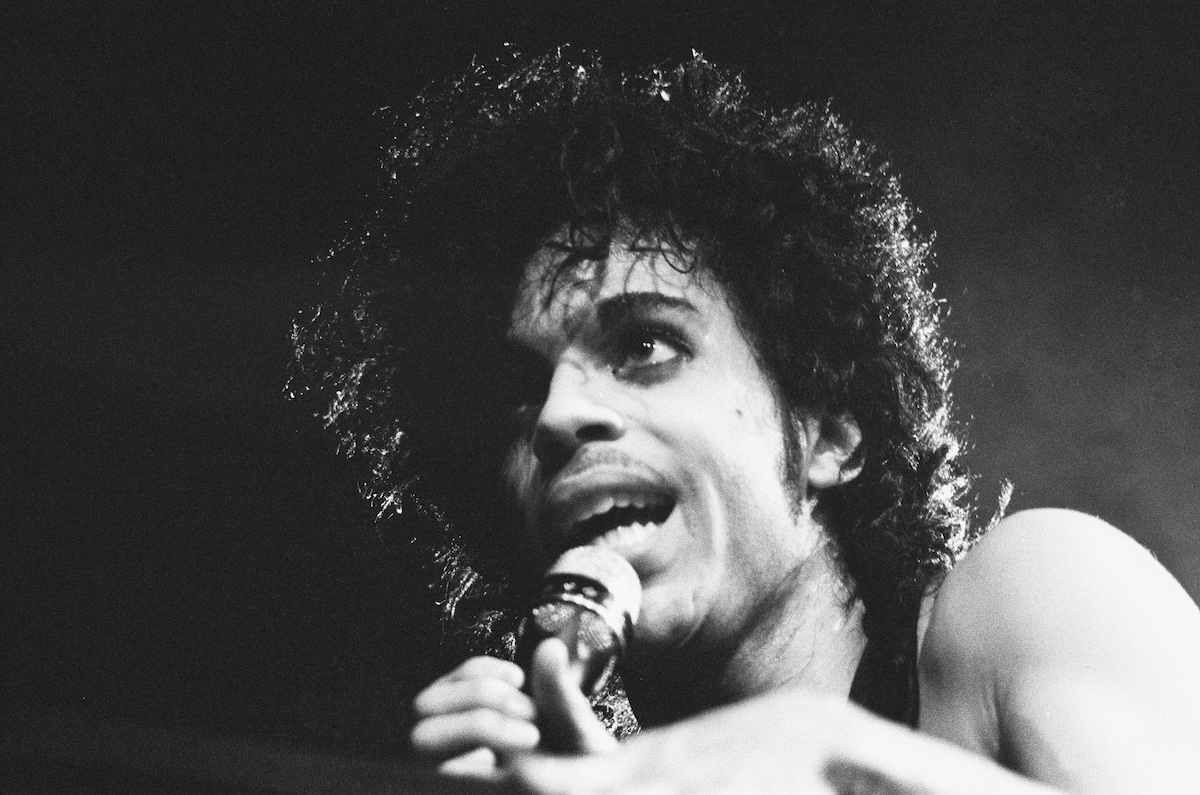
The runaway success of 1984’s Purple Rain – both album and film – turned Prince from Midwest R&B hipster to international superstar. At the core of his newfound reputation was the title track, which became the crowning glory of his subsequent live shows. It also closed the final gig he ever performed in public, in Atlanta, Georgia, on April 14, 2016, a week before his death.
“Whether or not he knew that would be his last concert is still up for debate, but the fact that he played ‘Purple Rain’ as the final song in his last ever set proves its significance,” reckons protégé and producer/engineer Chris James, who’s now overseen a new Dolby Atmos mix of its parent album. “I feel like he’s the king and we’re all the crazy people that aren’t accepted anywhere else in life. So it’s the kind of anthem that we can all unite with.”
Key Players
Bobby Z (Drums)
David Z (Engineer)
Novi Novog (Violin/Viola)
Susan Rogers (Engineer)
Chris James (Dolby Atmos mix engineer)
BOBBY Z: I first met Prince around 1977. The band had been through various changes, but one by one the Revolution came together. When Wendy joined, everything started to gel. It felt like we were a group who were going to conquer the world together. It started with “Let’s Go Crazy”. That’s when we knew that these songs were different. Prince was gearing towards the movie on a higher plane. We’d rehearse at the Warehouse on Highway Seven and at the end of one of those exhausting 10-hour days, he said: “I want to try something before we go home,” then started playing “Purple Rain” on the piano. So we just kind of all fell in. He didn’t really instruct us much at all that first time. Was it a country song, a gospel song, a rock song, a ballad, a love song, an inspirational song? It was really hard to tell where it was going.
DAVID Z: The first time I was aware of “Purple Rain” was when Prince gave me a rehearsal tape of him teaching the song to the band. He was shouting out the chords, so it wasn’t a complete performance at all.
BOBBY Z: I still have that first tape and he’s laughing at our mistakes. It’s actually a pretty simple song, but then Wendy added these expansive opening chords, which ended up being so iconic. They’re probably the most famous opening chords next to “A Hard Day’s Night”. By the time we got to August 3, 1983, we were able to lay down “Purple Rain” at First Avenue.
DAVID Z: Prince told me he wanted a really good recording of the show. It was a benefit concert for a local dance company, because [choreographer] Loyce Houlton had given him free space and taught him how to move. That was basically the premise. There was really no record truck available in Minneapolis, so I got hold of the biggest one at the time, from the Record Plant in New York. It was essentially Sunset Sound on wheels.
BOBBY Z: First Avenue held about 1,800 people. To record live in a club like that, with such an expensive multi-truck truck, was pretty rare in Minneapolis. I remember that night being so hot, with cigarette smoke everywhere.
DAVID Z: Prince came into the truck ahead of time and introduced Sheila E, who was his new partner. He said, “Can she sit in here and watch?” I said sure. It was all air-conditioned, so we were away from the heat. He’d paid for the truck and spent all this money. I had no idea it was going to turn into a movie.
BOBBY Z: Prince was hyped up. He was like: “We’re making history tonight!” It was Wendy’s first show and there were new songs. It definitely felt special. The heat and smoke maybe slowed you down a little, making you feel like you were crawling through space and time. So everything had this kind of magic. “Purple Rain” came at the end of the show. Of course, nobody in the audience knew the song, so they were just listening intently, trying to absorb it.
DAVID Z: It was such an intense night. The band had rehearsed every day for a year, and you could tell. Prince had whipped them into shape. The audience wasn’t moving at all, because they’d never heard this music before. The version of “Purple Rain” on the album is pretty much exactly is it happened. This was about a month and a half before they shot the movie.
BOBBY Z: Prince refined “Purple Rain”. He took out a verse about not needing money, so it became more spiritual. And it has the same end-of-the-world theme as “1999”: “Let me guide you to the purple rain”. So he’s playing the leader at the end of times. There’s all kinds of metaphorical stuff in it. Musically, the guitar solo is amazingly intact, the drum part’s intact, everything. I think of “Purple Rain” as lightning captured in a bottle.
CHRIS JAMES: The casual listener probably doesn’t realise that this was a live take. Granted, they overdubbed strings and maybe a background vocal, but everything else is live, not a single edit or punch. Now, that’s really impressive.
SUSAN ROGERS: In general, he would embellish afterwards, but he really didn’t do much with “Purple Rain”. It was intended as kind of a rock ballad. I’ve heard some people talk about him wanting to collaborate with Stevie Nicks on it. I know she was on the fringes of some conversations, so it could be true.
BOBBY Z: Prince was fascinated with Journey at the time. I think he played it for Jonathan Cain, because it was out of his element into the rock world and he thought he was maybe encroaching on Journey. We’d watched Bob Seger and the Silver Bullet Band do big ballads like “Turn The Page”. So it was inspired by trying to reach a crossover audience.
ROGERS: His philosophy was taking shape in that the way you look on stage is how you look morning, noon and night, seven days a week. He was adopting all the accoutrements of being a superstar. This wasn’t an act, this is who he was. He was planning for the movie and doing a lot of rehearsals, so we ended up going back and forth between Minneapolis and LA quite a lot, because he needed to be in California for post-production. So we’d work at Sunset Sound.
NOVI NOVOG: The first time I got called to Sunset Sound for a Prince session was for The Time. I thought he was going to be kind of a brat, a little snob. But he was the complete opposite, just the sweetest. And very funny, with a dry sense of humour. For “Purple Rain”, they asked if I knew anyone who played cello and I thought of Suzie Katayama, because she can improvise on the spot. We arrived and David, Lisa Coleman’s younger brother, was there too on cello. Lisa and Wendy were leading the session and I think Prince was on the phone from Minneapolis, listening in and then critiquing it. We kept overdubbing, so that session went on a long time. I also remember a young woman, Apollonia, being in the booth when we were recording.
ROGERS: I think Prince intended “Purple Rain” to be an anthem. That was his goal. And that’s why, on the Purple Rain tour, he would close the night with it and do a guitar solo for 20 minutes. It was like, “This is my flag planted on the moon of my music.” The crew would take bets every night as to how long his solo would last. But you could see how that song really connected with an audience.
DAVID Z: All we want is validity. Purple Rain the album, the movie, the song – was the biggest smash-through for Prince and it proved that we knew what we were doing. It showed that we weren’t just small-town people, like we were in the beginning.
JAMES: I was 10 years old when Purple Rain came out. That’s a very impressionable age anyway, but in ’84 – as a black kid in Memphis, Tennessee, and coming off the heels of Thriller Prince, Rick James and Michael Jackson were heroes for me. Then seeing Prince live just changed my world watching him play the instruments, singing and dancing, guiding the band. It was like he had a gang, a crew that had his back. It was the whole concept of everything they were presenting as a group multiple ethnicities and multi-gendered.
ROGERS: Before being hired by Prince, I’d been working in Los Angeles at Rudy Records, a studio owned by Graham Nash and David Crosby. When I left for Minneapolis in ’83, they were all puzzled that I would leave and go work for Prince, because he was still considered kind of this weirdo. He was a star, but he wasn’t yet a superstar. But he changed after the movie came out and after the tour.
BOBBY Z: Sweating the same sweat as him, in rehearsal and on stage, you got to know him. The success of Purple Rain certainly changed him from a position of control and power. In a sense, he killed off the old guy and became Prince as the world now knows him.
DAVID Z: He became much more paranoid, because everyone now knew who he was. So he only really trusted the people that he grew up with and that he could tell were his friends. His pet peeve was he didn’t want somebody getting ahead on his coattails, which many people tried to do. That’s when he got the bodyguards. But when you got him alone, he was still outspoken and he’d stand up on couches and scream and yell and dance. He was a funny guy, I loved him.
JAMES: When it came to doing the new Dolby Atmos mix of Purple Rain, there’s a tremendous amount of weight and stress when you touch such a blockbuster classic. A large part of that was doing the research, talking to Susan, talking to [co-engineer] David Leonard, reading all the articles, finding out what equipment was used. At Sunset Sound, I actually got to run the multi-tracks back through the exact console and some of the equipment that was originally used. Ultimately, you just want to service the work as best you can, so that the legacy can thrive – and to make new fans.
ROGERS: “Purple Rain” is symbolic and nostalgic for many people, but for younger people it’s suggestive of what’s possible. I currently teach at Berklee College of Music and nothing is more attractive to the students than the idea of someone who totally controls their own career, who writes, sings and plays all their own music. So they look at Prince as a paragon of how it’s done.
BOBBY Z: “Purple Rain” was his go-to moment. The fact that the climax of the movie is a downtempo ballad is pretty amazing when you think about it. The real legacy is how it affects people. People play it at weddings, which sums up the spirituality of it. It’s like a prayer that took on a life of its own.
FACT FILE
Written by: Prince
Recorded at: First Avenue, Minneapolis; Sunset Sound, Los Angeles
Produced by: Prince And The Revolution
Personnel: Prince (lead vocals, lead guitar, keyboards, string arrangement), Wendy Melvoin (rhythm guitar, backing vocals, string conductor), Lisa Coleman (keyboards, backing vocals, string arrangement, string conductor), Matt Fink (electric piano, backing vocals), Brown Mark (bass, backing vocals), Bobby Z (drums, percussion), Novi Novog (violin, viola), David Coleman (cello), Suzie Katayama (cello)
Released: September 1984
Highest chart position: 0 (UK); 2 (US)
TIMELINE
August 1983: Ahead of the filming of Purple Rain, Prince and the Revolution play a benefit gig at First Avenue in Minneapolis, performing “Purple Rain”, “Baby I’m A Star” and “I Would Die 4 U”, all slated for inclusion on the upcoming soundtrack album
June 1984: Following the global success of “When Doves Cry”, Purple Rain is released, selling over 13 million copies. The accompanying film hits theatres a month later
September 1984: “Purple Rain” is issued as a single. It becomes a major hit, with only Wham!’s “Wake Me Up Before You Go-Go” keeping it from topping the US charts
November 1984: The Purple Rain tour begins at the Joe Louis Arena in Detroit, it lasts for five months, grossing an estimated $30m in total
March 1985: Having already won two Grammys, Prince picks up an Oscar for Best Original Song Score for Purple Rain
The post “Lightning captured in a bottle” – The making of “Purple Rain” by Prince appeared first on UNCUT.