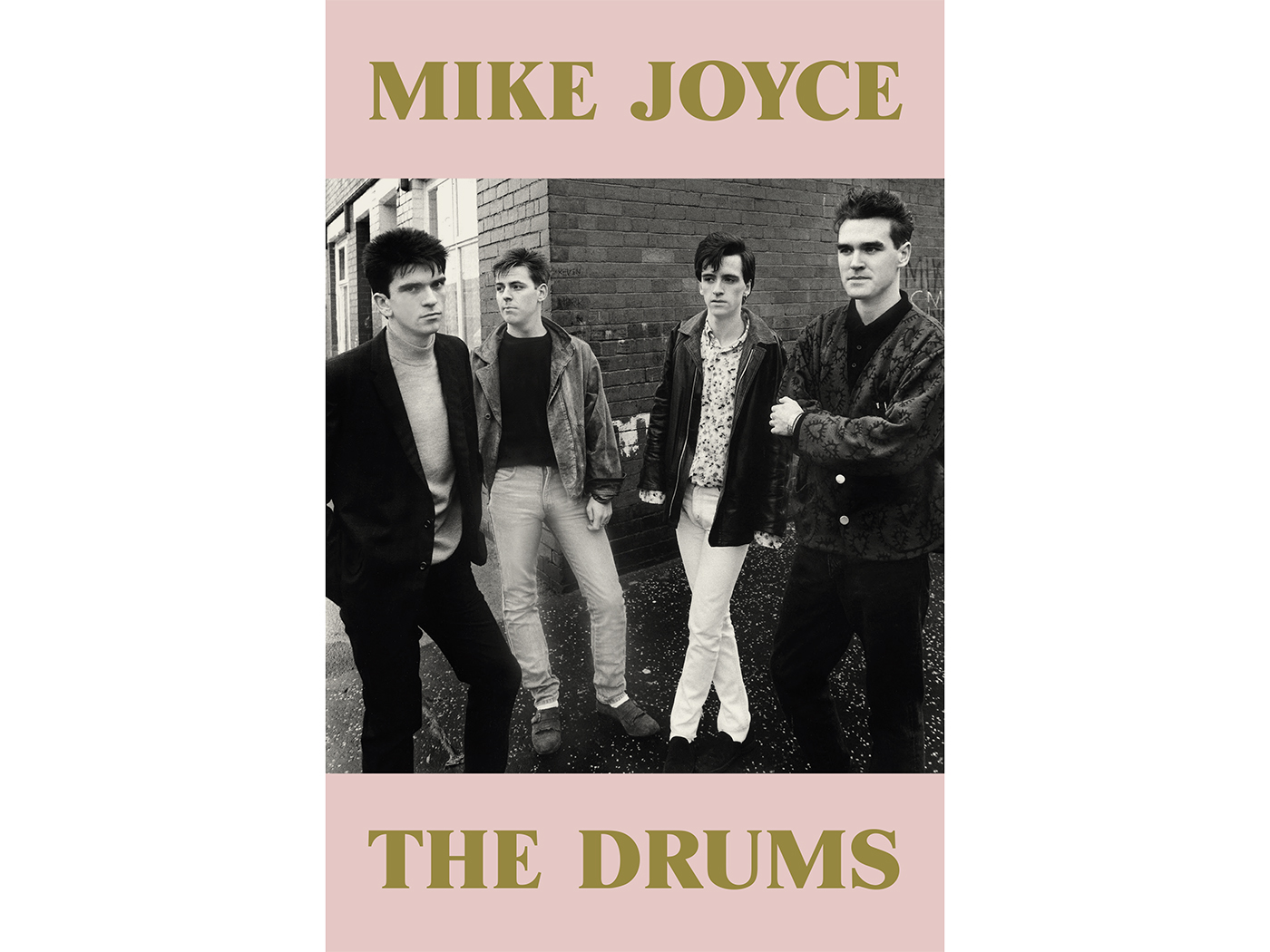
Speaking in the new issue of Uncut – in shops now and available to buy online from us here – as part of our extensive celebrations of The Queen Is Dead at 40, Stephen Street revisits his work with The Smiths at the height of their powers, unpacking the studio experiment, collective confidence and sheer momentum behind this classic album — a moment when, he recalls, it felt like anything was possible. “It was like, ‘We can do anything and people are going to listen,’” he tells us…
Speaking in the new issue of Uncut – in shops now and available to buy online from us here – as part of our extensive celebrations of The Queen Is Dead at 40, Stephen Street revisits his work with The Smiths at the height of their powers, unpacking the studio experiment, collective confidence and sheer momentum behind this classic album — a moment when, he recalls, it felt like anything was possible. “It was like, ‘We can do anything and people are going to listen,’” he tells us…
“After Meat Is Murder I got some very nice postcards from Morrissey — because that’s how he used to correspond back then — telling me how happy he was with the album and saying, ‘We’re going into the studio again soon. Hope you’re available.’ The first session I did towards The Queen Is Dead was for ‘Bigmouth Strikes Again’, which we recorded at RAK Studios in London. But the majority of the album was done at Jacobs, a residential studio in Surrey.
“The band had been playing so many gigs and were getting stronger and stronger, especially the rhythm section. Mike and Andy were turning into a powerhouse. Johnny was very keen to start pushing at boundaries. This was the first album where we began using samplers and overdubs, because he wanted to try new elements.
“With the title track, Johnny told me they wanted to do this kind of relentless rhythm thing. Up to that point we’d recorded everything quite traditionally, but this time we decided to use a sampler in the studio, which enabled me to get Mike’s rhythm on the toms. I basically looped it and ran it down for about 13 minutes, turning up the reverb every now and then to make it go louder, then quieter. Then he played the snare over the top, while Johnny and Andy were jamming along. Once Morrissey’s vocal went on, it was like, ‘Ah, here we go!’ As with a lot of those songs, I don’t think even Johnny had heard what Morrissey had prepared beforehand.
“‘Cemetry Gates’ was a particular favourite of mine. The subtlety of the rhythm section is just beautiful. I think we recorded that and ‘There Is A Light That Never Goes Out’ within a day of each other. It really struck me how the band were finding a lightness of touch that was quite something. I think that came from them being really in sync with each other.
“For ‘There Is A Light…’, I remember Johnny doing a very straightforward kind of strum, just playing the chord sequence, but I had a couple of delay lines on the desk to make his guitar lines bounce around a little. He was also playing this little flute riff on the Emulator, and the song really came alive. Within two hours the track had gone from being OK to really wonderful. When Morrissey put his vocal down, I remember thinking, ‘Wow, this is really special!’ Vocally, he always delivered. You got what you needed in three or four takes. Don’t forget, these were tracks being sung for the first time, so he was still working out what he was doing.
“I love the way we put The Queen Is Dead together, because we were approaching it from a slightly different angle. We were also experimenting. I used a harmoniser to shift up Morrissey’s vocal and give a harmony line to the one he was singing. Much frivolity was had because I’d leave it on while he was talking to us — he sounded like Mickey Mouse. The whole room would be falling about laughing, and he would be, too. People think he’s miserable, but we actually had a lot of fun in the studio.
“The bond between Johnny and Andy was so strong, because they were mates from their school days, but there was a genuine friendship between the four of them. Even though Andy had his drug issues, which I didn’t realise at the time, everyone seemed to be in a good place.
“Working on The Queen Is Dead was a bit like how The Beatles must’ve felt in the studio. It was like, ‘We can do anything and people are going to listen to it, because it’s The Smiths.’ I’m so proud of what we did together on that album. The fact that people still hold it in such high regard is really touching.”
Elsewhere in the issue, Uncut marks the album’s 40th anniversary by exploring how The Smiths reached their incandescent peak. Band members, studio allies and fellow musicians recall sonic experiments, postcard encouragements from Morrissey, backstage run‑ins with Mick Jagger, Iggy Pop and Eartha Kitt, and the unlikely settings — from residential studios to motorway service stations — where the record’s legend took shape…
The post “It’s how The Beatles must have felt” – Stephen Street on recording The Smiths’ The Queen Is Dead appeared first on UNCUT.