How Jimi Hendrix made Electric Ladyland: “The gate was open and with Jimi there was always a plan”
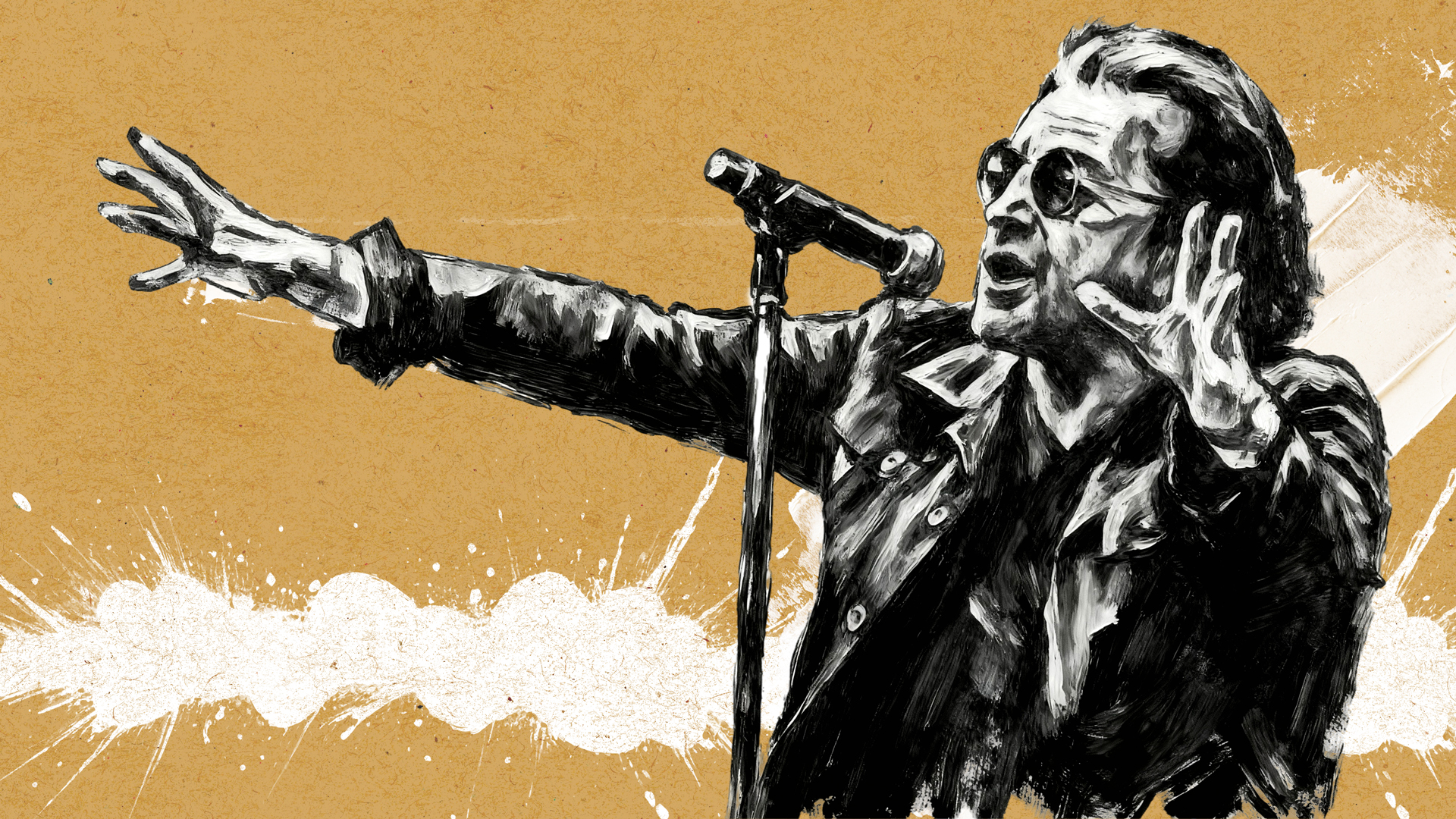
Originally published in Uncut Take 257 [October 2018]. Against a backdrop of riots, assassinations and radical expression, JIMI HENDRIX unleashes Electric Ladyland: his final studio masterpiece. Hendrix’s friends, collaborators and closest confidants – including Eddie Kramer, Robert Wyatt, Steve Winwood, Dave Mason, Jack Casady, Joe Boyd, Dave Davies and TaharQa Aleem – recall heavy times and even heavier jams. “The gate was open,” one eyewitness tells Peter Watts. “And with Jimi, there was always a plan.”
Originally published in Uncut Take 257 [October 2018]. Against a backdrop of riots, assassinations and radical expression, JIMI HENDRIX unleashes Electric Ladyland: his final studio masterpiece. Hendrix’s friends, collaborators and closest confidants – including Eddie Kramer, Robert Wyatt, Steve Winwood, Dave Mason, Jack Casady, Joe Boyd, Dave Davies and TaharQa Aleem – recall heavy times and even heavier jams. “The gate was open,” one eyewitness tells Peter Watts. “And with Jimi, there was always a plan.”
“We were all lost for words”
On a Friday evening in 1968, Jimi Hendrix paused during a show at Newark’s Grand Symphony Hall and said softly into his microphone: “This is for a friend.”
The previous day – April 4 – Martin Luther King had been assassinated. It was the latest horrific development in the so-called “long hot summer” that had rocked America for the past seven months. Among the eyewitnesses to Hendrix’s Symphony Hall dedication was Robert Wyatt, whose band, Soft Machine, supported The Jimi Hendrix Experience on their spring ’68 tour of the US. “It was quite a moment,” he recalls today. “It was a low-key remark – but everyone knew who it was for. What was striking was that rather than intense anger, his response was intense sadness. We were all a bit lost for words.”
When the Experience arrived in Newark earlier that day, they found the city in lockdown – bassist Noel Redding later recalled seeing tanks patrolling the streets. The band was advised by the authorities to cancel a second set scheduled for that same evening. In the event, the Symphony Hall was poorly attended; many ticket holders had elected to remain safely at home. The Experience played a short, subdued set, ending with “I Don’t Live Today” – a song Hendrix often dedicated to native American Indians but which, in the context of the Civil Rights leader’s recent death, assumed a far greater pathos.
In 1968, Hendrix himself at a turning point
Within a month, Hendrix had parlayed his emotion into song. In May, 1968, he began recording “House Burning Down” at new York’s Record Plant studios. “Look at the sky turning hellfire red,” he sang; a raw overture to the year of the Tet Offensive, the assassinations of Dr King and Senator Robert Kennedy, violent demonstrations as far afield as Orangeburg, Detroit, Washington, Baltimore, Kansas City, Louisville and Cleveland and the racist presidential campaign run by Governor George Wallace. in 1968, Hendrix was himself at a turning point. He had returned to America a conquering hero after his domineering performance at Monterey Pop Festival and the subsequent chart successes of his first two albums.
Emboldened and inspired, he spent the summer at the Record Plant working on a new album – Electric Ladyland – that deftly incorporated funk, soul, jazz and electronica alongside heavy, unclassifiable jams.
The album displayed an unquestionable power and beauty, but it also captured wider cultural tensions. Several songs on the album – “Crosstown Traffic”, “Voodoo Child (Slight Return)” and a cover of Dylan’s “All Along The Watchtower” – were entirely in tune with the convulsive spirit of the age. “it was an angry time and, sure, Jimi wrote a lot about love and peace,” says Hendrix’ longstanding engineer Eddie Kramer. “But he was also writing songs like ‘House Burning Down’ about the riots.”
The country was in turmoil
But as much as the country was in turmoil so, undoubtedly, was The Jimi Hendrix Experience. Hendrix’s habit of working demandingly odd hours, following his own capricious muse and keeping free and open house during sessions became too much for some – in particular, manager Chas Chandler and bassist Noel Redding. Within weeks of recording “House Burning Down”, Hendrix began to contemplate a future without the experience.
Other changes were afoot. Hendrix was also excited about the possibilities of new black identities. Between sessions, he jammed with Buddy Miles in new York clubs and hooked up with old friends TaharQa and Tunde Ra Aleem – identical twins from Harlem who were tasked with helping Hendrix connect with the black radio stations that had so far ignored his talent. “The white world knew who he was and had accepted him as a star,” says TaharQa Aleem. “But he wasn’t celebrated by black Americans.”
All this yearning for freedom – personal, professional and political – can be heard beneath the surface of Electric Ladyland. Its four sides found Hendrix exploring the happy congruence between the enquiring psychedelia of his previous albums and the radical funk he later pursued with Band Of Gypsys. There is a Merman, a Voodoo Chile and a wildcat; but among this free-spirited cosmology there was also a vivid process of exploration, as Hendrix unrepentantly embraced a thrilling new artistic vision.
“Has it really been 50 years..?”
“When Jimi left for London a few years earlier, he couldn’t get arrested in the States,” says Kramer. “By the time he returned, things had changed, big-time. I don’t think he got more cocky or arrogant, but he definitely became more confident. He was a genuine international superstar, king of the city. And he liked that.”
Recently, Eddie Kramer has spent time reacquainting himself with the 12-track master tapes for Electric Ladyland. “It is so exciting to pull up a tape like the one I am staring at right now: [reads] ‘electric Ladyland, intro, May 19, 1968’. Here I am 50 years later scratching my head saying, ‘Has it really been 50 years..?’
“Some of the tapes are hilarious,” he continues. “Sessions that started at 7.30pm and finished at 9.30am the next morning. These tapes boxes are a complete history of how and where and when we did the album. And it was an incredible record to do. This was the first time an artist like Jimi had so much control and time. We had a Top 20 album [Axis: Bold As Love]. So he was in and out of the studio all the time. it was amazing we got it all done…”
Although it is a New York album in sound and vibe, Electric Ladyland started life on December 20, 1967 at the four-track Olympic studio in Barnes, a riverside London suburb close to Richmond. Drummer Mitch Mitchell joined Hendrix for these early sessions. Noel Redding, meanwhile, increasingly frustrated at Hendrix’s open studio policy, was only an infrequent contributor, his basslines on songs like “All Along The Watchtower” played instead by Hendrix himself.
“Something caught Jimmy’s attention”
“I knew there were issues with Noel, but it wasn’t talked about,” says Traffic’s Dave Mason, who played 12-string on “All Along The Watchtower”.
Mason recalls being with Hendrix and “a couple of guys from the Pretty Things” when someone produced an advance copy of Dylan’s John Wesley Harding album.
“Something caught Jimmy’s attention about ‘All Along The Watchtower’,” he remembers. “It wasn’t too long after that that I went to the studio with him and Mitch.”
“Like A Rolling Stone” had been a staple of Hendrix’ early live sets and he recorded other Dylan songs, “Can You Please Crawl Out Your Window”, “Drifter’s eEcape” and “Tears Of Rage”. But his version of “All Along The Watchtower” is something else. With its sinister riders and howling wind – and the desperate opening plea for “some kind of way outta here” – Hendrix version chases down the essence of the times.
“Brian Jones collapsed against the console”
On a practical level, Kramer recalls the recording of the song as typical of the conscientious way Hendrix approached music during the Electric Ladyland sessions.
The guitarist played take after take, becoming increasingly frustrated as both Mitchell and Mason struggled with tricky timings. “The challenge with playing with Hendrix wasn’t just about talent, they had to keep up with his drive and ethic,” says Kramer. “They finally got it on Take 17 or 18.”
Matters were hampered by the presence of yet another guesting superstar musician. “All of a sudden there was this really pathetic piano playing, out of time,” says Kramer. “it was Brian Jones, completely out of his head. Jimi was signalling to me, ‘Get him out.’ I took Brian into the control room and looked after him until he finally collapsed against the console.”
“Playing with Hendrix is both intimidating and inspiring”
“Brian wasn’t really capable of doing anything,” notes Mason. “Jimi for the most part was a quiet, easygoing guy but in the studio he was all work. He didn’t sit around wasting time. He wasn’t a perfectionist, but he had an idea of what he wanted and he’d go after it.
“Playing with somebody like Hendrix is both intimidating and inspiring,” he continues. “There were a lot of flash, technically brilliant, guitar players but Hendrix was different because he was so innovative. It was the way he played and the way he used the studio. He was taking what we knew as blues and taking it beyond what anybody else was doing.”
The Olympic sessions yielded a number of near-complete songs (“All Along The Watchtower”; “Crosstown Traffic”), a work in progress (“Angel”, unreleased until 1971’s posthumous The Cry Of Love) and a pass at capturing a live favourite (“Tax Free” by Bo Hansson and Jan Karlsson).
Hendrix prepared to return to America
Despite the rising tensions between Hendrix and Redding and the unsteady assistance of a Rolling Stone, the business conducted at Barnes was, by all accounts, satisfyingly intimate and laidback. As the new year beckoned, Hendrix prepared to return to America, eager to follow his grooves towards a higher state of creative consciousness. Critically, though, while Hendrix left the States as a hardworking sideman for Curtis Knight & The Squires, he returned entirely on his own terms.
Hendrix arrived in New York on January 30, 1968. The same day, the Viet Cong launched the Tet Offensive – a surprise attack on South Vietnamese cities that initiated the heaviest and most sustained fighting of the Vietnam War. Also that month, Otis Redding’s posthumous single “(Sittin’ On) The Dock Of The Bay”, reached No 1 – a sombre companion piece to the currents of social and political violence that crisscrossed the coming year.
This new site opened up fresh possibilities
In the wake of these unfolding developments, popular culture responded. Before the year was out, The Rolling Stones released “Jumpin’ Jack Flash” and Beggars Banquet, The Beatles’ self-titled double album featured the proto-metal “Helter Skelter” and the aggressive sonic collage “Revolution 9”, while the sludgy pace of heavy rock – from Blue Cheer to Black Sabbath – captured a world growing darker.
Such concerns also began to filter into the fabric of Electric Ladyland. Sessions began at the Record Plant on W44th Street on April 18 – just a month after the studio opened for business. A larger space than Olympic, this new site opened up fresh possibilities that Kramer and Hendrix were eager to explore.
Songs were rehearsed and rehearsed so they could, if necessary, be recorded in a single take with no edits. “I jumped from 4-track to 12-track,” says Kramer. “I skipped eight tracks, and went straight to this bloody great one-inch machine. We scrapped it after a couple of months and replaced it with a 16-track.”
“Laser-guided concentration”
In May, Chandler and Hendrix parted company. A producer with a wealth of pop experience, Chandler found he couldn’t accommodate Hendrix’s increasingly ambitious ideas. With Chandler gone, Hendrix and Kramer were able to indulge the guitarist’s schemes. “After he left, the gate was open and Jimi could experiment,” acknowledges Kramer. “But with Jimi, there was always a plan.”
There was the spacey “Have You ever Been To (Electric Ladyland)”, the hard-rocking “Crosstown Traffic”, the funky “Still Raining, Still Dreaming” and the uncharacterizable 13-minute trip of “1983 (A Merman I Should Turn To Be)”, with tape loops, electronic flurries, flute (played by Traffic’s Chris Wood), jazzy improvisation and a general atmosphere of otherworldly weirdness. Although the album crossed genres and was recorded between tour dates, Hendrix maintained what Kramer describes as “laser-guided concentration”. Various themes can be traced across the album, most notably an interest in fire, water and space.
“It stitches together,” says Kramer. “All the songs relate to one another even if you’re going from ‘1983…’ to something completely different. It was almost like a concept album, a psychedelic journey with jazz and blues and R&B and funk, rock and pop.”
He’d jammed with Eric Clapton, and a few days later with Jim Morrison
The change from London to New York brought a change in outlook. There was an expansion of horizons, a greater sense of ambition. In New York, it felt as if anything could happen.
“What was the main difference between London and New York?” asks Kramer. “Well I remember landing and getting in the cab and just looking up at the place. It was an adrenaline rush I never got over. The deal was that if you could make it in New York you could make it anywhere but it was also that sense of being in a new studio in a new city, getting to grips with how the space would sound. It was a lot freer than we were used to and the album was itself more free, sprawling and open-ended.”
New York was always full of musicians, and Hendrix adored the company of his peers. His favoured hangout was the nearby Scene club on West 46th Street – a popular hang out for touring musicians. In March, he’d jammed there with Eric Clapton, and a few days later with Jim Morrison, playing The Beatles’ “Tomorrow Never Knows”. He jammed at other New York clubs: the Generation Club – the venue he later transformed into electric Lady Studios – and Café Au Go Go, where he played with Buddy Guy and Janis Joplin. These jams weren’t just about cutting loose with friends and like-minded individuals, they were crucial to the development of Electric Ladyland. They provided Hendrix with an avenue for collaborative improvisation, letting him experiment in a live setting and allowed him to test out other musicians to see if they could add something to recordings.
“You never went anywhere without being ready to play”
Accordingly, Hendrix flung the doors of the Record Plant wide open to accommodate Stephen Stills, Steve Winwood, Al Kooper, Buddy Miles and Jefferson Airplane bassist Jack Casady. “The jams were part of the creative process and out of that came a song,” says Kramer. “Sometimes a fully fledged, fully realised piece, and sometimes just a riff that needed to be developed.”
Jams weren’t competitive. They were about sharing, not showing off. After meeting at Monterey, Casady often jammed with Hendrix and Mitch Mitchell. “These were the days when you carried your instrument at all times, like a gunslinger,” says Casady. “You never went anywhere without being ready to play. Musicians are nearly all interested in learning and most of them are generous about sharing their knowledge. So when you ran across people with a different style and a take, it was interesting. Music is an art form that’s different from anything else. You don’t often see three or four painters going up to the same canvas but in music it’s about the interchange and dialogue between musicians.”
Songs started to emerge. On April 8, Hendrix spent half an hour in his hotel room – Drake’s on east 56th Street – recording demos of “Long Hot Summer Night”, “1983… (A Merman I Should Turn To Be)”, “Moon Turn The Tides… Gently, Gently Away”, “Angel”, “Cherokee Mist”, “Hear My Train A Comin’”, “Voodoo Chile” and “Gypsy Eyes”.
“He was stopping traffic”
The relationship between jams and songs can be heard in the way the 15-minute “Voodoo Chile” – an improvised, structured jam with Jack Casady and Steve Winwood – was distilled by the experience into the shorter, more intense “Voodoo Child (Slight Return)”.
On May 2 1968, when Jefferson Airplane were in New York to record a TV show, Hendrix invited Casady, Steve Winwood and sundry others back to the Record Plant. “It was a funny sight,” says Kramer. “Imagine Jimi walking down 8th Avenue with his hat and guitar case leading this troupe of 15 people. He was stopping traffic.”
After watching the experience record, Casady and Winwood were invited to join in around dawn. “Hendrix came up through music in some ways a similar route to me,” recalls Winwood. “He learnt a lot of the old skills. It wasn’t like he
just got up one morning and thought, ‘I climbed on the back of a giant dragonfly.’ He’d done all that and played all those songs and understood music. He had some wild thing in there, which he liked to inject into it. The take of ‘Voodoo Chile’ that’s on the record is Take Three – on Take Two he broke a string, and changed it himself. You didn’t have guitar techs in those days to tune your guitars. Take One’s quite good, but it was Take Three that was the one. I knew pretty much what he wanted from me, and after the first take, he didn’t correct me or tell me anything. There was very little talk, the tapes rolled…”
“Jimi was able to experiment”
“It wasn’t as simple as a jam, there was a full structure to the song, so it was an extended song that you were able to improvise in,” explains Casady. “We took directions through the language of playing. Jimi was able to experiment with his ability and with effects in order to create an atmosphere. ‘Voodoo Chile’ has a really eerie sound that kind of places you in a different atmosphere and that’s what he liked to capture. You are transported to a different world.”
It was a different world, but it had a foot planted in the reality of 1968. “Voodoo Child (Slight Return)” became an anthem of political unrest, with an abrasive, urban tone that captured some of the year’s aggression. When playing the song with the Band Of Gypsys at Fillmore east in January 1970, he introduced it as “the Black Panthers’ national anthem”.
It’s difficult to know if that was provocation or tongue-in-cheek. The Panthers pestered Hendrix for donations throughout 1968, asking him to take a more political stance. In interviews, Hendrix would dissemble but since returning to New York and following Martin Luther King’s death, the singer had clearly grown more engaged. In the summer, he made a $5,000 donation to the Martin Luther King memorial fund before attending a tribute concert at Madison Square Gardens on June 28.
“A damning criticism of the war”
“I don’t think we ever discussed politics,” says Casady. “But things were happening. There was turmoil across the world and everybody knew that was part of the landscape. Nobody tried to avoid it, it was the context. One of the ways musicians did that was to express it through music. Another way was to do benefits.”
What made Hendrix’s position more complicated was that he was one of the few African-American rock performers to connect with mainly white audiences. Kramer notes that while Hendrix was “very sympathetic to any black cause”, he was never very vocal about it.
“But it came out in the lyrics and playing,” he says. “A year or so later with Band Of Gypsys, he put his foot down and started writing songs like ‘Machine Gun’. That was a damning criticism of the war in musical terms. Then he began doing ‘The Star-Spangled Banner’ in that same visceral way. Electric Ladyland could be seen as his first articulation of that.”
“Make it cosmic but keep it military”
During the summer, Hendrix sought out two old friends, Arthur and Albert Allen. The brothers – who later changed their names to Tunde re and TaharQa Aleem – had known Hendrix since the early ’60s when they’d shared an apartment on 97th and Columbus. Now, he wanted them to help get his music across to black audiences.
“We had some connections with black radio,” explains TaharQa. “So we listened to Jimi’s music but there was nothing that was relative to the type of music that black people were programmed to listen to. Black people listened to music that was strictly on the one. That’s why people like George Clinton studied Jimi and created P-Funk – that was Hendrix being taken and put on the one. If you could do that, make it cosmic but keep it military, it worked. Why was it military? Because we were in a war.”
As part of their bid to get Hendrix’s music across to black America, the Aleems persuaded him to play a benefit concert on a flat-bed truck on a Harlem street corner in September 1969. On this occasion, he referred to “Voodoo Child (Slight return)” as “Harlem’s national anthem”. But when they took Hendrix into Harlem, they found only one or two people who recognised the most famous black rock musician on the planet. “It wasn’t as if James Brown or Sam Cooke or Otis Redding walked through the community,” says TaharQa.
There was a disconnection between black America and Hendrix, and that pained him.
“He was certainly political”
“It was about the beat,” says Joe Boyd, the producer, who made a film about Hendrix after his death. “People at a black club didn’t wave their arms around in the lights like they did at the Fillmore. Frankie Crocker, a black radio personality, said that he had a couple of late-night DJs who played a Hendrix track here and there, but they couldn’t put it on heavy rotation because they’d lose the listeners. A bigger hero to the black community was Otis redding, who went to Monterey and did exactly the same show he did in Alabama. But Jimi wasn’t taking black American culture and shoving it down the throats of white people in the way Otis and Aretha were doing.”
Several interviewees describe Hendrix as a “black hippie”, somebody caught between two worlds. When Hendrix had arrived in New York, he tried to turn the Aleems on to LSD, but the drug was not part of their universe. “I think it tortured him that the audience for his music was white,” says Boyd. “And he was certainly political, but he got his politics more from white protest than Black Power. He was tortured by it. He wanted to please his brothers and be respected.”
How political was Hendrix? If his FBI file is to be believed, he agreed to play a benefit concert for the Chicago Eight, the counterculture luminaries who were charged with conspiracy following anti-Vietnam War riots at the Democratic Convention in August 1968. One of those charged, Abbie Hoffman later said Hendrix was “the only rock performer I know of who gave bread to anything most of us would call ‘radical’.”
“I’m not for guerrilla warfare”
Within 18 months of Electric Ladyland, Hendrix expressed qualified support for the Black Panthers. “I naturally feel part of what they are doing,” he told Rolling Stone in 1970. “But not the aggression or the violence… I’m not for guerrilla warfare.”
As Electric Ladyland neared completion, the Experience were falling apart. Although Redding was barely present, Mitch Mitchell was still there – and The Kinks’ Dave Davies lauds the Hendrix-Mitchell combination, which had its final creative outpouring on Electric Ladyland. “Jimi was probably one of the very few guitar players in the history of rock that didn’t need a backbeat, so Mitch could play all over the fucking place, throwing it here and there,” he says. “Hendrix had a metronome in his head.”
Even Mitchell, though, was struggling to keep up. Buddy Miles played on two of the funkier songs on Electric Ladyland – “Rainy Day, Dream Away” and “Still Raining, Still Dreaming” – which both stemmed from a single jam. This was Jimi pursuing a new direction, one that reflected the assertion of his black consciousness. Miles later joined Hendrix in an all-black trio alongside Billy Cox, as Hendrix jettisoned the carefully crafted, multiracial image of the Experience.
“Jimi did his own thing at his own time”
“Buddy did what he was supposed to do, which was to bring it back on the one,” says TaharQa Aleem. “But Mitch was freestyle with his own creativeness and that’s why they were so good together. Mitch helped Jimi free the music and that’s why he loved Mitch so much. He was the white guy who understood how to incorporate that freedom into Jimi’s music.”
The fracturing of his band didn’t seem to derail Hendrix. Eddie Kramer thinks that was partly due to lessons learned from the absent Chandler. “The discipline that Chas had installed in Jimi was still present even though Jimi did his own thing at his own time,” says the engineer.
The final session took place on August 27 – eight months after work began in London. The album came out on October 16. Coincidentally, on the same day African-American athletes Tommie Smith and John Carlos offered up a Black Power salute as a political demonstration during a medal ceremony at the Summer Olympics in Mexico City. Three months later, Richard Nixon was elected 37th President of the USA.
Electric Ladyland was intense, exciting, dangerous and at times, deeply strange
Electric Ladyland was the last album recorded by Hendrix with the Experience, and the last studio album released during his lifetime; although he remained reliant on the working practices he adopted here, where mood rather than structure prevailed.
“I have a memory of Jimi doing the final draft of ‘Gypsy Eyes’ at the very last session, where he had the song written out on different pieces of paper – matchbox covers, backs of envelopes, letters from hotels,” says Kramer. “He’d lay it all out on the console and do the final draft on a big yellow legal pad. Then he’d take that down to the studio and sing it for the first time. That was wonderful to see in action.”
Electric Ladyland was intense, exciting, dangerous and at times, deeply strange. It has the sound of an LP forged in a climate of political and personal uncertainty – but also of great opportunity, when dramatic change seemed genuinely possible. And it was an album made by an innovative genius who was, for the first time in his life, given complete freedom to explore his muse. 1968 was heavy, but Hendrix thrived.