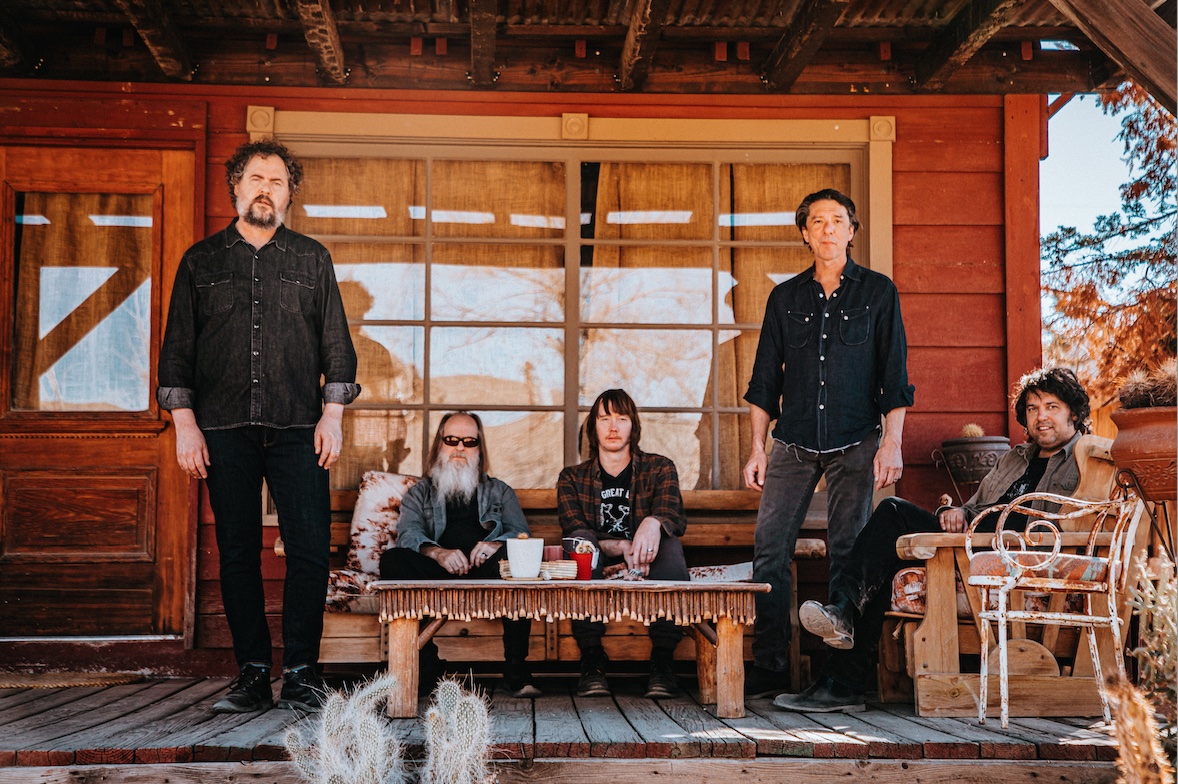
Jason Isbell: “I couldn’t enjoy my life now if I kept my mouth shut”
It wasn’t until 2013’s Southeastern that Jason Isbell began to work out who exactly he was writing for. The Georgian had been in the business for a decade – first with the Drive-By Truckers and then as a solo artist, but on Southeastern the newly sober Isbell began to focus on a single imaginary individual and make them his audience.
It wasn’t until 2013’s Southeastern that Jason Isbell began to work out who exactly he was writing for. The Georgian had been in the business for a decade – first with the Drive-By Truckers and then as a solo artist, but on Southeastern the newly sober Isbell began to focus on a single imaginary individual and make them his audience.
“You can’t write for everybody in the audience because then you get Big Macs,” he explains. “So you write for one person – and that person has to be kind of an asshole, this one imaginary audience member who wants to enjoy the song but has heard an awful lot of them.”
Thus armed, Isbell embarked on the illuminating, Grammy-strewn second half of his career, releasing a string of richly detailed, sometimes painstakingly crafted albums, while continuing to take a stand on social media for his values and beliefs. “When my life started getting easy, that’s when I started to feel I could say these things out loud,” he says. “I couldn’t enjoy my life now if I kept my mouth shut.”
DRIVE-BY TRUCKERS Decoration Day NEW WEST, 2003 The 22-year-old Isbell joins the Truckers for their Southern Rock Opera tour and promptly writes the best song on their best album.
ISBELL: I’d written songs and recorded demos for the publishing company at FAME studio in Muscle Shoals but “Outfit” and “Decoration Day” were the first songs I wrote that anybody had heard. I wrote “Decoration Day” on the first tour I did with the band. I woke up in Carbondale, Illinois one morning before everybody else. We had one person sleep in the van to make sure nobody broke in and stole the equipment. I didn’t know that if you woke up early, you were allowed to come in the house. I was scared that if I went in the house, somebody would shoot me, so I sat on the porch and wrote that song.
I played it for Earl [Hicks], our bass player, and he didn’t like it all, but I waited for Patterson [Hood] to get up and then played it to him. I was trying to write something that would fit that band. Their mission statement, not that Patterson ever said this but as it occurred to me, was they took jokes and stereotypes about the South and fleshed them into reality, empathising with what had been a punchline. That was what I set out to do with the songs I wrote for them. Having three songwriters was a strange idea – the whole concept of that band did not make sense on paper, but it worked for some time. I’ve never been in another band with three songwriters. I don’t think many people have.
JASON ISBELL Sirens of the Ditch NEW WEST, 2007 Still a Trucker, Isbell writes and records his solo debut with Patterson Hood – released two months after he exits the band.
I was writing these songs while in the band but I knew they weren’t right for the Truckers, they were a little softer and a little quieter, much more like songwriter-type material. Sometimes we played “Dress Blues” with the Truckers, but I knew they would be solo record songs. I wasn’t writing them for the specific assignment of being in the Truckers. I had them for a while and Patterson helped me turn it into an album in Muscle Shoals.
We had a good time recording, it was pretty easy because there weren’t any expectations. We had Shonna [Tucker] on bass, Brad Morgan on drums and I did most everything else. It was easy because I had 10 or 12 songs and I could record them without worrying what would happen. The things I learnt in hindsight are that you can’t have much filler on an album, and if I did it again I’d write more songs. There are some good ones on the record – “In A Razor Town” is good, “Dress Blues” is good, “The Magician” is really good. Patterson was very helpful as far as stopping me going too far, because on the later solo albums I had a habit of throwing it all in – kitchen sink-ing it – as we were having fun in the studio, but on this we stopped at the right time. But the lessons I should have learnt, I didn’t learn until quite a few records later. These things can take 10 years to stick.
JASON ISBELL AND THE 400 UNIT Jason Isbell And THE 400 Unit LIGHTNING ROD RECORDS, 2009 Isbell forms a band and begins to forge his own identity as a songwriter and frontman.
I had been kicked out of the Truckers. I was drinking a whole lot and we weren’t getting on when we went on the road. I needed to work and the first thing I knew to do was put a band together. Working in any shared vision situation is difficult. I have discovered I do well if I am in a studio being told what to do by somebody else, or if I am calling the shots. I don’t do all that well with any other combination of the two. This time I was making the decisions.
Jimbo [Hart, bassist] was the first person I talked to. I moved in with him when I got divorced and asked if he’d be in my band and he said yes. We had Browan Lollar, who is now in St Paul & The Broken Bones playing second guitar, and Derry deBorja, who had been in Son Volt, on keys. Matt Pence came in to play drums and engineer. He had been in Centro-matic with Will Johnson, who is in my band now. We did it at FAME and it was a really good time, but I don’t think it really had the songs of the other albums before and after. Probably because I was drinking so much I didn’t spend enough time on the writing. There are some good songs. “Cigarettes And Wine” was John Prine’s favourite song of mine and if that was the only thing to come out of it, well that’s enough to make an album.
JASON ISBELL AND THE 400 UNIT Here We Rest LIGHTNING ROD RECORDS, 2011 An increasingly thoughtful Isbell meets future wife Amanda Shires, who becomes an important influence on his music and life.
I hadn’t stopped drinking, but Here We Rest was a breakthrough. It sold fairly well and won some awards. “Alabama Pines” was the song that really helped that record stand out. It was the first time I reached what was then my potential as a songwriter. I spent time with it and got it right and it’s still in the set – it’s the only one from those early records that I play almost every night.
We recorded this with Chad [Gamble], who is still our drummer, and also Amanda, who played on “Alabama Pines” and “Codeine”. “Tour Of Duty” is another strong song that holds up. It’s important because I was starting to set songwriting rules that I still follow. At this time, “Dress Blues” was the only song that resonated outside the Truckers. I found that writing for a specific assignment like the Truckers eliminated a lot of the issues that I’d run into when writing for myself. That’s why I developed rules. A big part of it is imagining a single target you are writing for, the “educated stranger” I think Wordsworth called it, and on Here We Rest I was beginning to understand that.
With the Truckers, that was Patterson, he’s the one I wanted to impress, and for the solo albums it’s somebody very similar to me but it’s not me. I have this imaginary critic, somebody I try to impress, that makes me go a little further to erase anything that will take the listener out the moment. I don’t want to add to the detritus of the musical canon, I want to do something that has a reason to exist.
JASON ISBELL Southeastern SOUTHEASTERN, 2013 After he stops drinking, Isbell knuckles down and produces a modern classic of roots-based storytelling and confessional songwriting.
I started writing these songs when I got sober. I wrote for about a year. Initially Ryan Adams was going to produce with Glyn Johns, who was in LA. I’d been talking to Ryan; I thought he had booked a studio so bought tickets for me and the band. He had all these plans, we were going to record direct to tape with Glyn helping out. Then Glyn and Ryan had an argument and Glyn went home. I sent Ryan demos I’d made – these are on the rerelease we are putting out in September – and all of a sudden he had something else he had to do. He couldn’t find the time.
At the time I thought he didn’t like the songs but now I think it was the opposite, he was intimidated. I was scrambling, I didn’t have any money as I’d spent it on plane tickets for the band, but I had met Dave Cobb not long before and he agreed to make the time and record it at his home studio in Nashville.
We did it in a couple of weeks. We recorded for a week. He said we needed a boneheaded rock song, so I wrote “Super 8” that weekend and we came back to record that, the vocals and overdubs. We called it a solo record as Jimbo wasn’t there and it worked so well that I did the same for the next one, Something More Than Free. I didn’t have confidence in myself as a bandleader, so it was a way of eliminating argument. The only difference was the idea of the imaginary listener had matured and I had time.
When I was writing before, I’d get up at noon, have coffee, aspirin and some liquor, start writing at one and then at three or four it was time to go to the bar. With Southeastern I was getting up, making a pot of coffee and working until it was done. That meant I had 12 great songs instead of two. There were “Cover Me Up”, “Elephant” and “Traveling Alone”, but it was an entire record of the best I could do. I really wanted sobriety to improve my work. It became almost competitive – sober me was competing with drunk me to whoop my own ass at songwriting.
JASON ISBELL AND THE 400 UNIT The Nashville Sound SOUTHEASTERN, 2017 With two hits under his belt, Isbell returns to the studio with the 400 Unit.
I knew what to do at that point. I was feeling a bit of pressure because the two records before had succeeded spectacularly in every way, both critically and commercially. We’d started our own label for Southeastern and worked with our own distributors, so that meant I didn’t need to sell a million copies to make money. But I dealt with it by spending so much time on these songs.
Amanda helped a lot. I’d write a song, bring it to her, and then we’d work on the draft to find ways to improve it. The only difference was “If We Were Vampires”, which happened instantly. That was the last thing I wrote and sometimes I think is the best song I’ve ever written. I was watching Hoarders on Friday night, and Amanda asked what I was doing when I had to go to the studio on Monday. She said I had to get off my ass and write a song! I decided to write a love song, but there are so many of those there’s not much left to say. I realised that what a love song really is about is the fact we are going to die. If we didn’t die, we wouldn’t fall in love, we’d get round to it later. That’s why we pair up and go through things as a couple – we know it will end and want to make that connection before it does. I was so proud of that record. It was a good document of where my mind was.
JASON ISBELL AND THE 400 UNIT Reunions SOUTHEASTERN, 2020 A reflective Isbell writes about his past, including his struggles with alcohol, for the first time.
Maybe this was a little more conceptual. That might have been an accident at first, but it doesn’t mean it doesn’t become intentional – when you notice you are doing something, you start to do it more, that’s part of the creative process. That was a big part of Reunions. I’d written “Only Children” in Greece with Amanda and some friends – they were songwriters and we shared our songs. It reminded me of the time I’d spend doing that as a teenager almost every night, playing new song with my friends. That’s not something you do when you become a professional and I was sort of pining for those days.
I’d always wanted to be a songwriter. It was the only thing for me, right from the start. My family played and I loved it so much right from the beginning. It was magical but it was done by people who were very humble and simple. It didn’t need money or education. We were in a small town, everybody worked hard and then in the evening we’d come together and make this magic happen. I went back into my past and I felt I had enough time behind me – I’d been sober for a decade – so felt comfortable looking at the past on songs like “It Gets Easier”. I had worried there was risk in romanticising the way my life had been, but now I felt that risk had passed and I was stable. I wanted to look back at my life without romanticising it but also without beating myself around the head.
JASON ISBELL AND THE 400 UNIT Georgia Blue SOUTHEASTERN, 2021 Isbell keeps his word after pledging to record an album of covers from Georgia if Biden won the state in the 2020 election.
I backed myself into a corner, but it’s easy to make an album of covers. It wasn’t taking a great risk making that promise and there are a lot of great songs related to the state of Georgia, so we could make 10 of these without repeating ourselves. The significance of Georgia Blue for me was that I went back to producing my own record for the first time since before Southeastern. I’d produced other bands, but I wanted to know I could do the work without having to prove anything. With Georgia Blue, I could focus on the songs and the performance. That made it possible for me to produce Weathervanes.
The Indigo Girls song [“Kid Fears”] was a lot of fun. Julien Baker sang on that and is now a huge star, which makes me so happy. We also did Vic Chesnutt’s “I’m Through”. Vic was so funny, so witty, I loved him and that song, that’s a particularly desperate, sad song about a relationship and Vic’s relationship with the world in general. The things I really loved was doing Precious Bryant [“The Truth”] and James Brown [“It’s Man’s Man’s Man’s World”], those R&B songs that I would never feel qualified to sing or want to make money from. The opportunity to record those songs and put them out for a good cause made it a whole lot of fun because that’s my favourite music. Blues and R&B is really the greatest cultural export that America has ever offered the world.
JASON ISBELL AND THE 400 UNIT Weathervanes SOUTHEASTERN, 2023 The 400 Unit are given a little more room to rock out, while Isbell continues to pen detailed, empathic accounts of working life in America.
I wanted there to be an experience in the studio between me and the band that wasn’t impacted by any outside influence. It wasn’t about being a producer as much as it was about doing the production, that experience of getting the best version of these songs. Dave Cobb focuses on the lyrics and the singer, which is what a country producer should do, but I was shifting away from that country aspect because I wanted a lot of guitars on this record. Dave has good taste; I wanted some of that eliminated from the process!
My perspective has changed. I am a bit older now. If you can make that fit into the songs, you can have a lot of success. I couldn’t write a song about the immediacy of new love, but I can write about the way relationships solidify or deteriorate over time. If I write about somebody who has made bad decisions like on “King Of Oklahoma”, I’m not judgemental, I’m writing about the situation that leads to those decisions. I am not saying that is, in itself, better, but it’s better as an adult.
That’s why Weathervanes worked. I spent time on the songs and was honest about my age and my perspective. You have to accept that, to be aware of it and not be scared of it. Then you can write honestly.
This article originally appeared in Uncut Take 319 (December 2023)