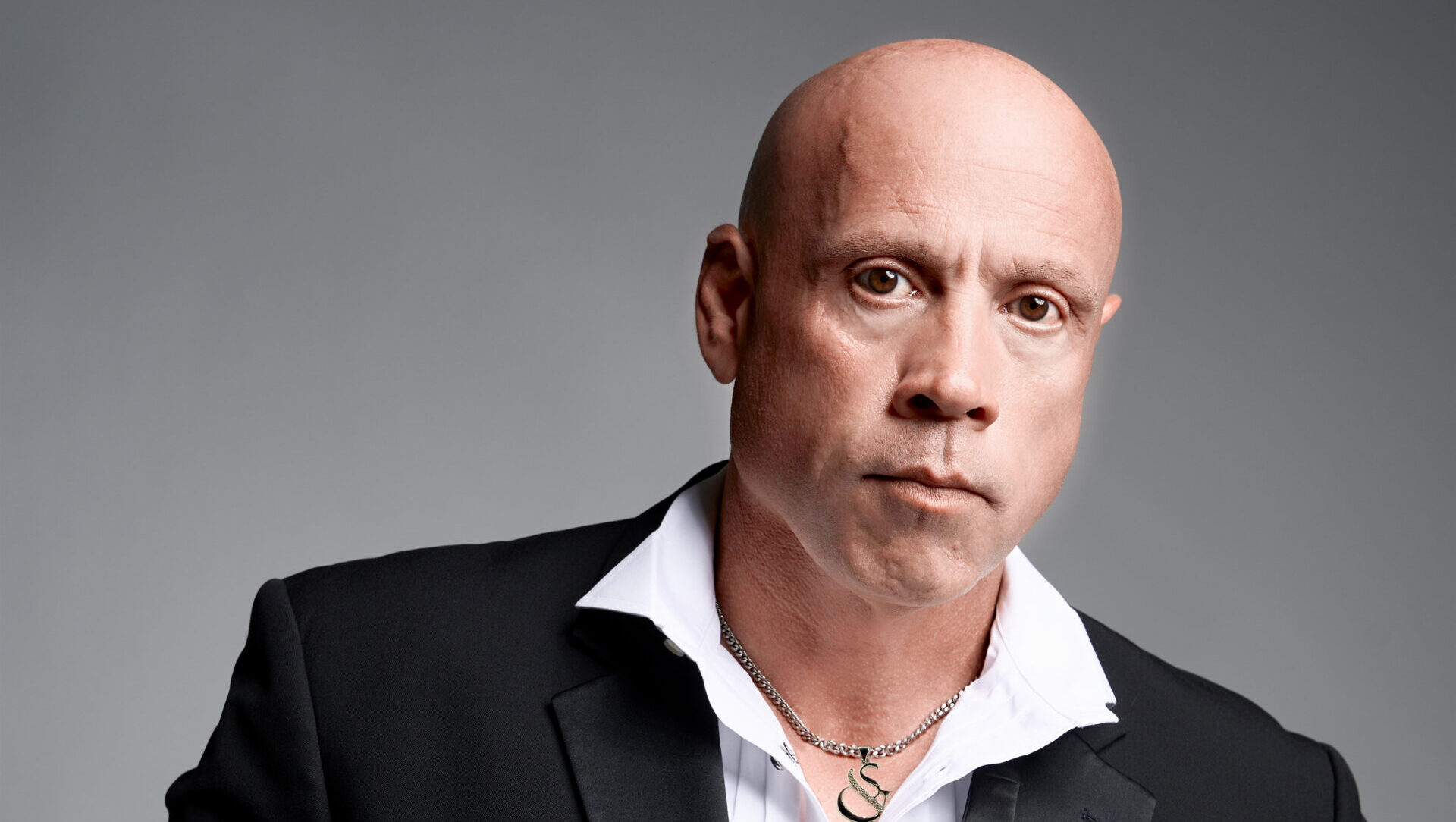
Damilola Akinwunmi witnessed a full circle moment last December as his company, Dapper Live, broke the Guinness World Record for “the largest orchestra for an Afrobeats concert.” The groundbreaking show, labeled “Trench Symphony,” featured 80-plus orchestral members performing alongside scene stars like T.I Blaze, TML Vibez, Bhadboi OML, Rybeena, Lasmid, Cazulee, Kashcoming, and DWillsHarmony, and it all happened in the heart of Lagos, Nigeria, where everything started for Akinwunmi seven years ago.
“It meant everything to do this at home, to accomplish our goal of coming up with creative ideas for our concerts that you wouldn’t expect and making things happen that typically wouldn’t in our genre,” shared the impresario, who singularly started parent company Dapper Group in 2018. The independent music firm has since grown to 25 employees, representing 20 artists with a prolific distribution cycle that has produced an impressive 10,000 records in less than a decade. Since 2022, Dapper Group has also surpassed 1 billion streams of its music each year.
More from Spin:
- Robyn’s ‘Sexistential’ Surveys Middle-Aged Desire, Doubt
- Surfbort Is Stuck In This World and Making the Craziest Most Of It
- Ice Cold Facts

Through Akinwunmi’s leadership, the umbrella of services offered by Dapper (his nickname) has also branched out into what he terms a “whole 360-degree company.” It not only includes the Dapper Live events division but also Dapper Music & Entertainment for management and label services, Dvpper Digital distribution services, Dapper Films for movie projects, publishing arm S94 and BOP (Bangers Only Productions) that manages producers and songwriters. All of it centers around one key mission: Connecting Africa to the world through music.
“People, especially Black Americans and even white people, want to be connected to Africa. They want to learn about Africa, and one of the easiest ways to learn about Africa is from the music,” said Akinwunmi, who has plans to tour “Trench Symphony” across Nigeria as well as internationally in London, Birmingham, Dublin, Paris, and Toronto in the coming months. “If you meet an African and you know about African music, you can have a one-hour, two-hour conversation just about the music,” he added. “You can learn about the food, you can learn about places, you can learn language just from the music. So I feel it’s the easiest and one of the most fun ways to learn about our culture.”
Below, Akinwunmi (who is also a recording artist and was named 2023 Executive of the Year at the TurnTable Awards) discusses his classical upbringing, the catalyst that inspired his Guinness World Record feat, and where Dapper Group is headed next.

What inspired you to try and break a Guinness World Record?
Well, first of all, my girlfriend broke a Guinness World record in 2022 for the longest cooking marathon. So I was inspired by that. But I had also seen that Young Jeezy did something similar with hip-hop. And I thought, I’m sure we can do this for Afrobeats if we try.
Were there any challenges in attempting to merge the world of orchestra with Afrobeats?
The idea for mixing an orchestra with the kind of music that we do, it didn’t make sense on paper because a lot of the artists from our label would be termed as street artists. The music is very indigenous and represents subgenres in African traditional music. But the first thing is, as Africans, we’re always trying to bring light to what’s going on back home in terms of the core music. This is where it’s from. And there’s also so many people who have taken this music and popularized it over the years. So for us, this was our way of contributing to the course of Afrobeats. But we also had to make it sound good. Because it’s one thing to just merge genres and it doesn’t sound good, you know? We were able to do that but it was pretty hectic. We had worked with a smaller orchestra and were rehearsing for almost two months. Then we started rehearsing with the full group three weeks before the event. The sheer quantity of people in the room at the same time was a lot. But at the end of the day, we all just understood what we’re trying to do, and we came together and made it happen.
Can you describe what happens when an orchestra mixes with Afrobeats? What is the experience when you see this show?
We have a version of the show on YouTube that people can listen to. For me, it’s such an amazing experience because in primary school and high school, I would play clarinet and saxophone. I actually was in an orchestra when I was in primary school, so it really was a full-circle moment that we were able to do this. But, when I was young, I never understood why I had to listen to classical music like Beethoven and other artists. The teachers would transcribe the music notes and orchestral sheets, and we would have to learn how to listen to it. And I just hated it so much. But I also got accustomed to listening to music like that. And I knew if you were to add an orchestra to Afrobeats, there’s a sheer musicality and originality like you wouldn’t believe, because it’s so soulful. African music is so rich with instruments and the same thing with an orchestra. So I think that’s where the synergy is really applied. If you’re very musical, you’re just going to enjoy it.

How did you originally get started in the music industry?
I started with management around 2016, 2017, while still at university. But I didn’t go to school for this. I didn’t learn it in any formal institution. It was just me on the road to my dreams, every day reading up, watching interviews, and just trying to understand the ropes. And meeting people as well, having mentors and making contacts and just being in the field. It all came at a time when social media was becoming a theme in terms of using social media to find traction with songs. So I worked at developing artists, worked with producers as well and developed producers. It was more about building an ecosystem that would outlive and outlast just what we’re doing right now but being able to build systems that people are also able to benefit from.
Where did the idea to branch out on your own with Dapper Group come from and how did you think it could benefit the industry?
There was an understanding that we needed this. It got to a point where I just felt like the industry, especially in Nigeria, was at a point where there was going to be a paradigm shift because Nigeria was heavily dependent on hyperlocal means of getting our music out. Streaming was already blowing up around the world. And I thought it’s about to happen for Nigeria and Nigerian music, and at that point I started Dvpper Digital because I felt like this was what the industry needed at the time. The fact is that not too many people invest in the same music industry in Africa and in Nigeria. We don’t leave it to foreigners to do it. And I genuinely don’t believe that anybody can understand it as much as somebody who’s living here in terms of just learning the areas to focus on and even how to help artists and being able to give back to the community as well. That’s the vision for us as a group.
What’s next for Dapper Group and Dapper Live?
We want to do this on a world scale. There’s so much demand for a show like “Trench Symphony.” We want to take what we do to universities, to the U.K., Paris. We haven’t been to America yet. We almost did at one point, but ended up running into some visa issues. But we’re making sure that that happens this year. You know, as Nigerians, we’re always trying to outdo ourselves and not from a sense of competing with anybody else but just competing with ourselves. I feel like we have a chip on our shoulders in terms of always trying to set the bar so high. So for me, this is just the beginning.
To see our running list of the top 100 greatest rock stars of all time, click here.