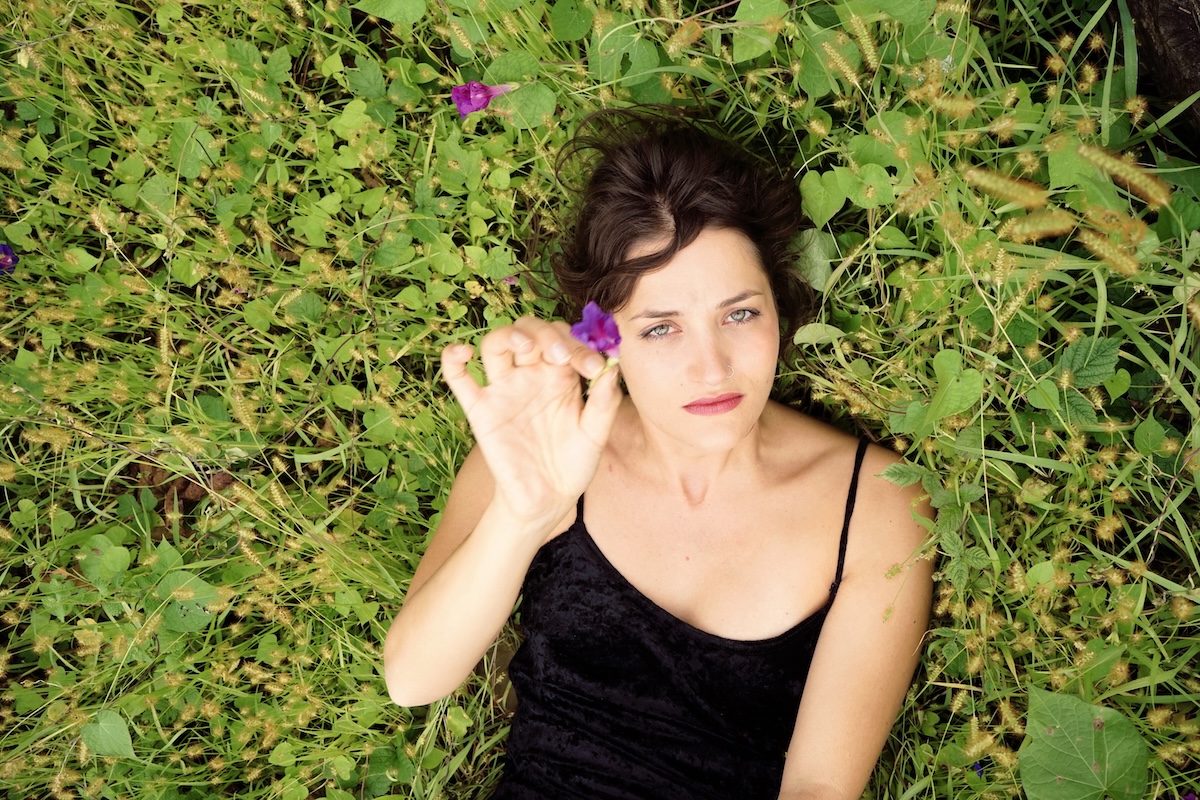
Gabi Hartmann is walking through Paris, bundled against the cold in a red snood. Despite the biting weather, her face is bright and open, flushed soft pink by the wind. It starts to rain and she darts into a café, her phone camera flickering off and on. When I can see her, the conversation instantly feels lighter.
This mirrors the French singer-songwriter’s music, whose gentle, dreamy tones lulled me to sleep the night before. Before pressing play, I was in a state of heightened agitation—distressed about the situation in Iran, distraught over how many people had been killed and were still being killed, panicked about how long it would take to be freed from the regime’s tyranny. This was before the current conflict, and it was scrambling my brain when Gabi’s beautiful voice, carried by softly rippling, pan-global rhythms, began their healing work. Halfway through her album, La Femme Aux Yeux De Sel (Le Long Voyage), I had melted into my bed, my spirit lifting even as my body sank. By the end, I felt markedly better.
More from Spin:
- Kevin Parker, Diplo, Flume Have Credits On New BTS LP
- Outside Lands, Oceans Calling Fests Set Lineups
- Gorillaz Gather For North American Tour
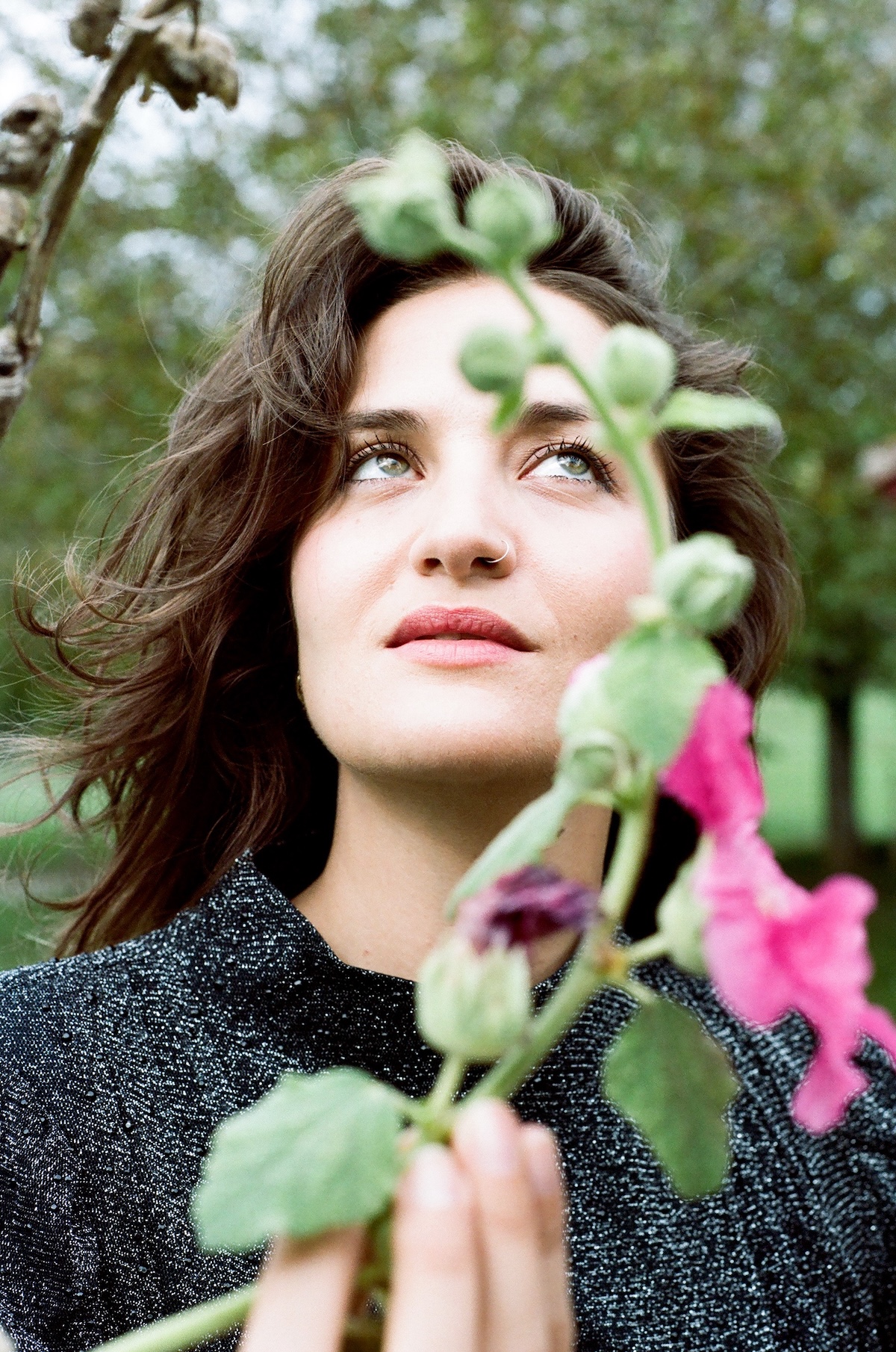
I share this experience with Gabi, who is visibly moved by the impact her work can have on listeners whose lives are dramatically removed from her own. Yet La Femme has an international bent, with eight bonus tracks included on the reissued version released ahead of her first-ever U.S. tour beginning March 9.
Paris-born and -bred, Gabi was raised “in a family with an environment very open to the world,” she says. Her physician mother worked for Doctors Without Borders, and growing up, Gabi was accustomed to refugees and visitors from around the globe staying in their home. She began writing songs in high school as a hobby and went on to study politics and philosophy in college. During a study-abroad year in Brazil, she became more seriously focused on music. She later earned a master’s in ethnomusicology, concentrating on African music.
She completed fieldwork in Brazil, South Africa, Mozambique, and Guinea before returning to Paris and beginning to write in earnest with musicians she met there. “I wanted to have something that represented all the styles of music I was influenced by and listening to,” she says. “Paris was the best place for me, because I could meet so many different musicians.”
She says she responds more to time periods than to indigenous sounds, referencing the ’50s, ’60s, and ’70s—“after folk music was recorded”—as her happy place. For La Femme, she created a “protected sonic fantasy world,” heavily influenced by ’60s exotica. She takes cues from Marguerite Duras’ song with Jeanne Moreau, “Rumba des îles,” honing in on that particular moment in musical history.
“All the albums I’ve been listening to from the ’60s and ’70s influenced my sound, my writing, my everything,” she says. “I really like this very warm sound that they were making in that time. That’s what I’m always looking to get in my sound. Today, we will try to have everything right. The voice right. Everything very clean and perfect and I’m kind of against that. I’m not the only one. I listen to a lot of artists that are more indie and they also are doing this research of the sound and trying to get a more organic, warmer vintage sound.”
She found a likeminded partner in Jesse Harris (Norah Jones, Maya Hawke, Madeleine Peyroux) in New York, when he was looking for a French singer. She didn’t know him then, but felt an immediate synergy with his songwriting. Some of their early collaborations appeared on her 2023 self-titled debut. She returned to Brazil with Harris for sessions and later brought him to Paris to continue recording.
“We share this common thing of liking to write songs that sound like jazz standards,” she says. “The first album has more traditional songs, this one has more pop influences and I wanted to experiment a bit more with the writing, the arrangements, the production of the sounds.”
French saxophonist, keyboardist, and composer Laurent Bardainne was one of Gabi’s collaborators on La Femme, bringing a folk-jazz energy to “Love High.” Syrian flutist Naïssam Jalal appears on “Le lever du soleil” and the French indie band Oracle Sisters feature on “Drink the Ocean.”
The album unfolds in three chapters, following the story of a fictional character, Salinda, who lives in the tropical island setting of this sonic fantasy world. Her eyes are made of salt, and she travels the globe seeking a cure: Each time she sheds a tear, she loses a bit more of her sight. “She tries not to cry, but she can’t help it,” says Gabi. “She’s melancholic. She has a lot of pain. She needs to cry.”
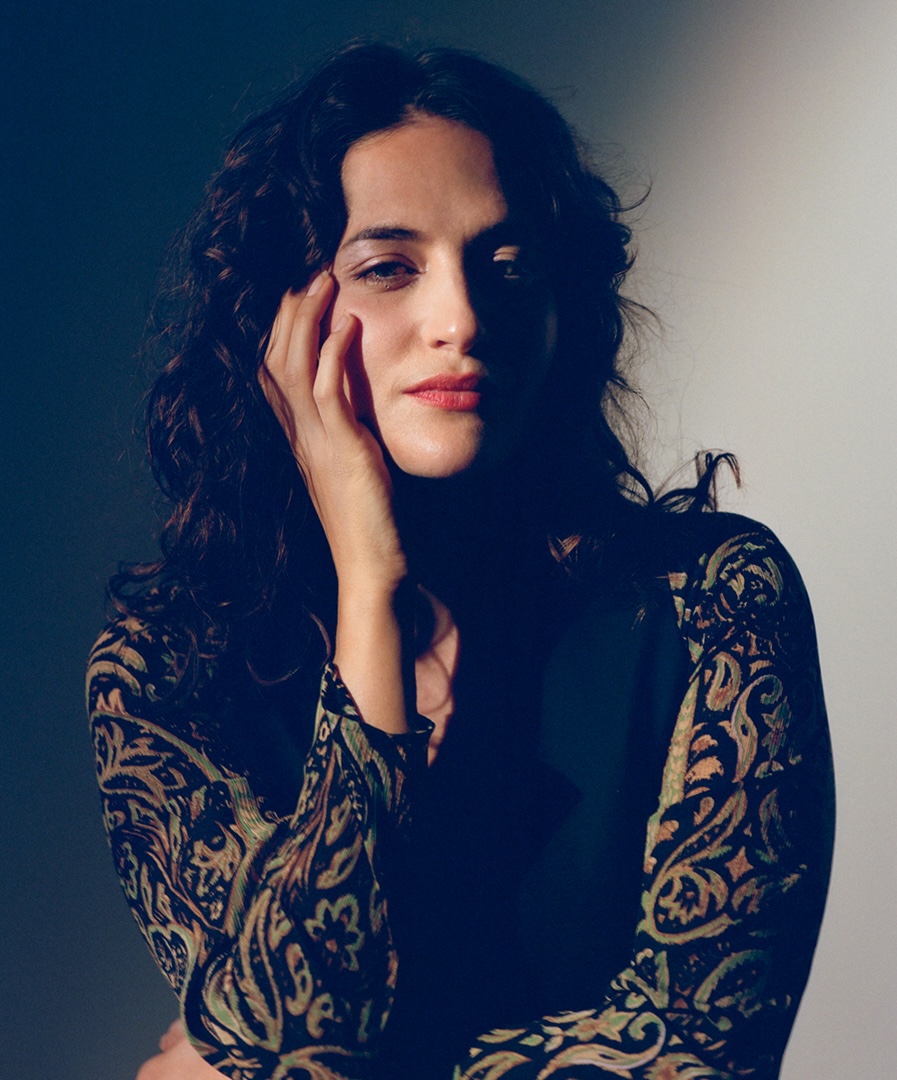
When Gabi explains Salinda, I’m jolted. The day before we speak, I had cried so much and for so long that my skin burned from the salt in my tears. I had to take a cool shower, wash the salt away, and moisturize to repair the damage.
She cites Serge Gainsbourg as a key influence, naming his concept album L’Homme à tête de chou—about an imagined love affair—as motivation to create a universe of her own for La Femme. “I felt like maybe it was the moment for me to create a world and get a narrative, an avatar of myself, or something I could create where I could look at myself from outside,” she says. “I could have more freedom and also more distance to understand myself and my emotions, and try to be sincere. For that second album, it really helped me go further.”
In another form of disguise, Gabi sings in multiple languages on La Femme—English, French, Spanish—each opening a different expressive space.
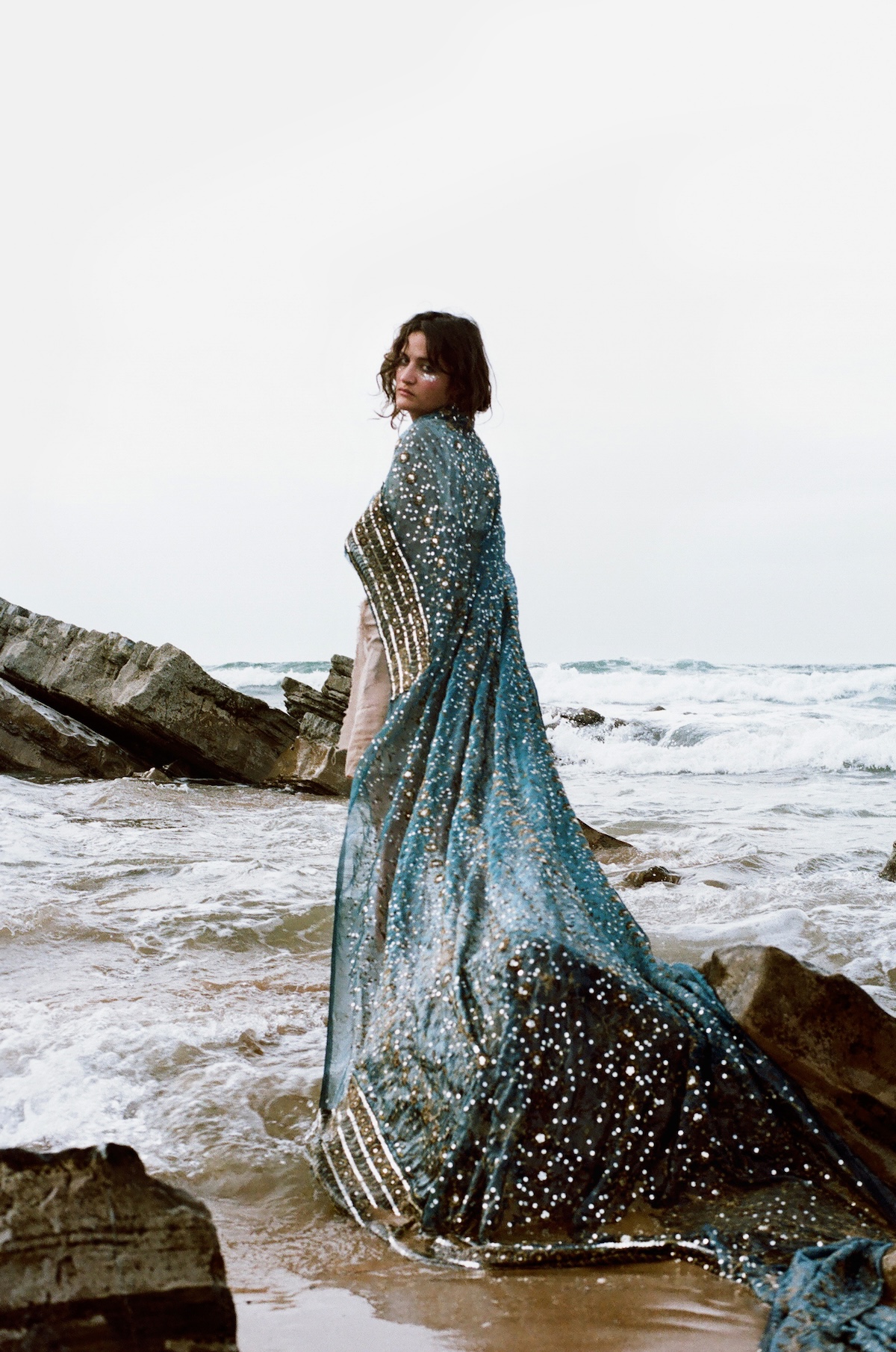
“I’m not sure if it’s easier,” she says of hiding behind languages. “I’ve been singing and talking in so many different languages, it’s very hard to choose only one. By creating that character, I felt I could show all my faces. I can’t really choose one identity, because I feel like I don’t really belong to one cultural identity. I feel comfortable traveling between identities.”
Interestingly, she sang in English before French, partly because of the jazz and soul singers she grew up listening to. And while she identifies with being Parisian—a multicultural melting pot of ideas and traditions—she doesn’t feel the same pull toward being “French” in a musical sense. “It’s not what I’ve been listening to,” she points out. “It wouldn’t make sense for me to do an album in French, even if I am French. It would be weird. My album should have many sounds and influences by people in Paris, or in countries I’ve visited and people I’ve met there. It’s more a more honest reflection of where I’ve been.”
To see our running list of the top 100 greatest rock stars of all time, click here.