It Goes On and On: The Slow Burn of Too Short’s ‘Blow the Whistle’
Rappers Lil Jon and Too $hort attend Rick Ross’ birthday party at Bongo’s on February 3, 2007, in Miami, Florida. (Credit: Julia Beverly/Getty Images)
Oakland hip-hop originator Too Short had already dropped 15 albums by the time Blow the Whistle rolled around in 2006. It was a strange period for the rapper, who was nearing the end of his contract with Jive Records after 12 projects with the imprint. Short was already leery of what the label would do for him after it fumbled his 2003 single, “Shake That Monkey” featuring Lil Jon and the East Side Boyz from his previous album, Married to the Game. He had a theory that once an artist had been with a major for years, as he had, they slowly became less of a priority.
But he knew he had a heater on his hands with “Blow the Whistle,” the title track of his sixteenth album. Produced by Lil Jon, the song was intended to sound like classic Too Short. As predicted, Jive put minimal support behind the track and Short was forced to rely on his independent hustle to blow it up. Despite not charting on the Billboard Hot 100, the track did peak at No. 1 on the Bubbling Under Hot 100 chart and is one of Short’s most recognized songs to date.
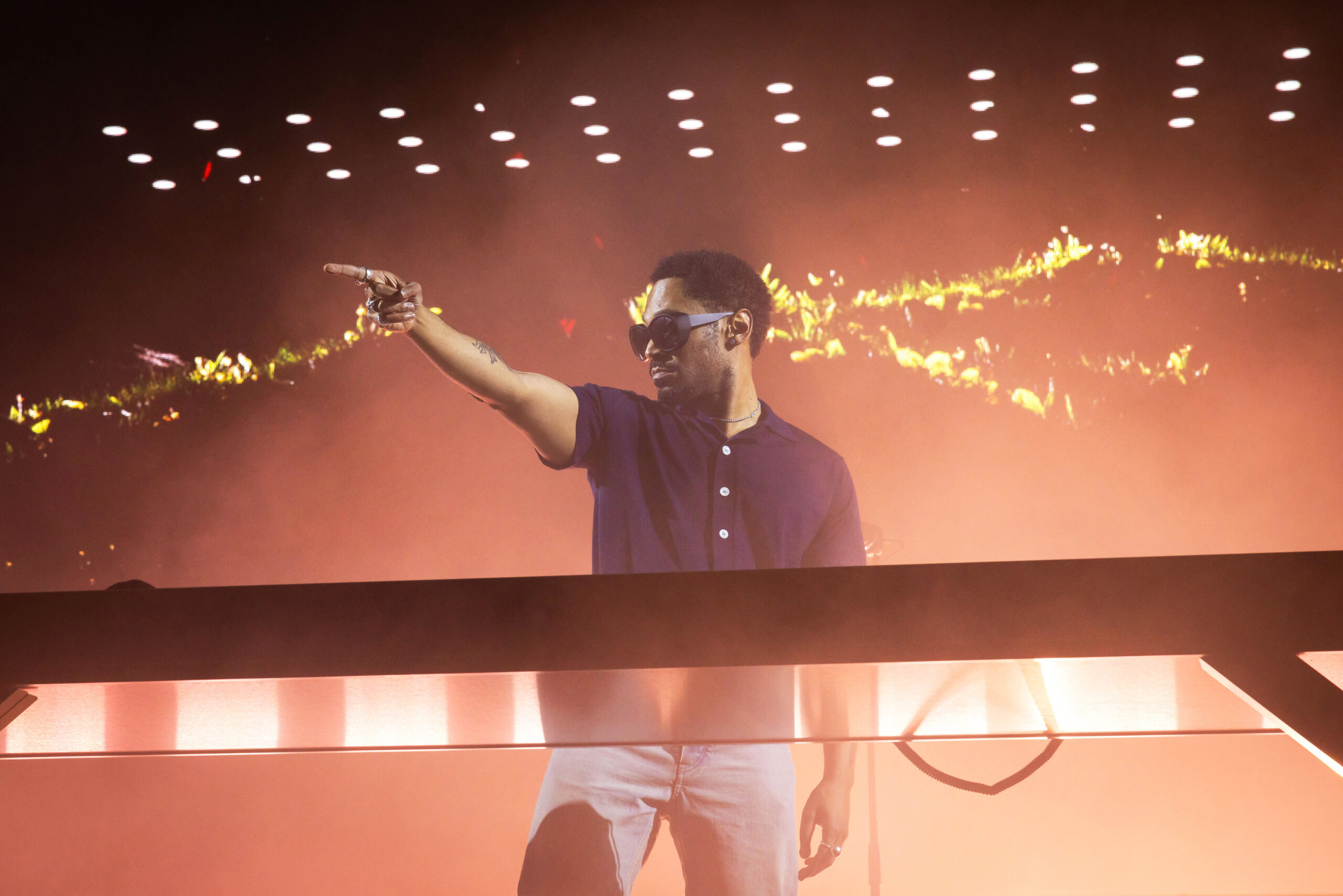
Too $hort performs onstage during Once Upon a Time in LA Music Festival at Banc of California Stadium on December 18, 2021, in Los Angeles, California. (Credit: Scott Dudelson/Getty Images)
In 2016, Drake interpolated some of Short’s lyrics from “Blow the Whistle” into his verse for DJ Khaled’s 4x-platinum single “For Free,” in 2020 Saweetie sampled it for her single “Tap In,” and in 2024 fellow Bay Area rapper G-Eazy sampled some of the lyrics for “All I Wanna Do.” Jay-Z also freestyled over the song in 2008 on behalf of LeBron James, who was beefing with NBA rival DeShawn Stevenson at the time. Its cultural impact extended into video game soundtracks and Orangetheory playlists across the country.
Over the last 20 years, Too Short has released six more solo albums, toured the world and formed a supergroup—Mount Westmore—with Snoop Dogg, Ice Cube and E-40. He’ll reunite with Snoop and Cube on April 20, when they hit the stage at Red Rocks Amphitheatre for AEG Presents’ annual 420 show. Mount Westmore has more music on the way and Too Short’s schedule is packed. As Short says in the first verse of “Blow the Whistle,” it goes on and on.
Superpowers
Lil Jon was going to do my album. I forget how many songs we put on the album. I think Lil Jon and Jazze Pha both did eight songs each. You gotta look at the tracklist. I think it was 16 songs, but it was the 16th album. I think that’s what the math was. But Lil Jon was giving me these songs. We collaborated on songs with his style of production, and we do really good with that. And he’s like, “I wanna make a song that sounds like a Too Short song.” He’s like, “I want it to sound like you made it a really long time ago, but it just never came out, like got lost in the vault.” So he gave me the beat to “Blow the Whistle.” Usually, I simmer with the beat and just see where it takes me, and the fact that the whistles were blowing on there gave me the motivation to write a song using sports metaphors.
225,000 Hours Later
Before I even wrote the song, I did all this shit. I knew that I had been rapping and recording and making albums longer than most artists. So right in the beginning of the song, I wanted to tell you in a most shocking way how much longer I’ve been rapping than everybody else. I sat there and I calculated, “What would 20 years be in hours?” And I just came up with this beautiful number: 225,000 hours. I just wanted a lot of numbers to reflect the sports metaphors I was using. And the song really is just about, “You’re doing too much.” Like, you’re trying to be like me and you’re doing too much. So in this game, the metaphor of life, the game, they need to throw a flag, blow the whistle, penalty flag, call foul—something—you’re trying to do too much. But if you are of that caliber, that’s cool. I drop some names, like Snoop Dogg and UGK, and I’m acknowledging rappers who have always rapped about player lifestyle.
Lil Jon and Too $hort perform onstage during the Power 106 Powerhouse festival at Glen Helen Amphitheatre on May 12, 2018, in San Bernardino, California. (Credit: Scott Dudelson/Getty Images)
DRAAAAAAKEEEEEEEE?
When Drake redid the “Blow the Whistle” track, he starts his verse off saying my lyrics. He says, “I must have superpowers” and then something like he’s been rapping for 223,000 hours, so he came up too short [laughs].
But What About….
I think some major labels, they don’t—no matter how much money they make with you, and I don’t know why they would be like this…I just personally feel like some labels do this. At the time, I think Jive Records had subscribed to the formula, when an artist is getting close to the end of the contract, something has to be sabotaged to get them to re-sign or, they put the last album on the shelf and just don’t ever let them release the last album for a long, long time. I think the objective is that the labels don’t want you to be huge without them. They needed a 360 deal because they need to structure that kind of deal because artists were getting rich off clothing lines, movie careers and all these other ventures that had nothing to do with music. And they’re like, “Well, if we’re going to make you famous at music and you get popular, we want in on everything you do.”
Not So Fast
In my case, there was no 360. I’d been in my career on Jive Records for a long time. In the end, it wasn’t just “Blow the Whistle,” it was also “Shake That Monkey.” The singles were good. Lil Jon was involved. They really believed in Lil Jon as a producer. At one point, they had told me that his sound was only for the Southeast part of America. It couldn’t go anywhere else. And I was trying to rally for him to be an artist over there and do whatever. They were like, “We really don’t believe in him,” and then they turned around and started hiring him to produce every artist they had.
Ice Cube and Too $hort at the Genesis Convention Center in Gary, Indiana in July 1989.. (Credit: Raymond Boyd/Getty Images)
There Had Been Signs
I remember the “Shake That Monkey” video shoot. You want your video to be shot on film. You want it to look quality and you want it to be pushed as a single with the label support. We go down to Miami and we have this large cast. Go look at the “Shake That Monkey” video. It’s got to be a 100 people in the video. When we get the video back and we play it back, it looks real cheesy and real cheap. It looks like the evening news or a public access TV show. We’re like, “What happened?” And they’re like, “Oh, it wasn’t in the budget. We didn’t use film. We just used the video cameras or some cheap shit.” And that was “Shake That Monkey,” which was a surprise. It had no label support. They didn’t push the single.
Promises, Promises
It was 2004 or 2005, whenever, when “Shake That Monkey” came out, and they totally fumbled it. The song takes off as hot, but we have zero label support. In those days, I’d been so into my career for so long that I had a lot of relationships at nightclubs with nightclub DJs, radio DJs, and program directors, and I would just be out there. I would do a lot of shows, and I was self-promoting, which is partially what they banked on. And then “Blow the Whistle” comes and Jive goes, “Yeah, we fucked up on ‘Shake That Monkey,’ but we definitely going to push this. This is big.”
I did the whole album with Jive in conjunction with Lil Jon. Half the album is produced by him, who’s on fire at the time of recording in 2005, and half the album was done by Jazze Pha, who’s also on fire. We wanted to capture this particular album, which was to coincide with all the years I’ve been in Atlanta. I was like, “I’m going to stop and let these two guys put an album together with me,” and it’s an amazing album.
Too $hort at his manager’s house in Oakland, September 21, 1987. (Credit: Steve Ringman/San Francisco Chronicle via Getty Images)
Oakland, Baby!
We go to Oakland and shoot the “Blow the Whistle” video with total, full label support. All the bells and whistles. Then the single drops and the video drops. It’s on fire. We go to San Diego, L.A., the Bay Area and work our way all the way up to Seattle and Portland for a promo tour and stopping by whoever we need to go see at radio, too.
It lasts maybe like two weeks. Probably went to Fresno. We just did a little West Coast run, and they say to me, “We’re going to stop for two weeks, and then we’re going to pick up and do the Midwest, down South, and keep the promo tour going.” In that time frame, before I can start back up, they go, “Hey, we have some issues. It’s just not in the budget.” And they just drop the whole album after just two weeks of promo.
Silver Lining
I think that the blessing was we were getting to the end of the relationship and it was just no love anymore. There was a lot of family love, but it wasn’t like as a business. It was no more Jive believed in Too Short. It was just over. That was a good thing, because I think if they would have put everything behind those two songs, and treated them like it was a major artist on a major label, and we’re backing it to the fullest, I don’t think that those songs would have crept along little by little by little for years and years and years. It happened organically. If it would have been forced on you, it would have just been like sex. You reach the point, you bust a nut and it’s over [laughs]. It was like a slow burn.
Too $hort performs during the EA Sports Madden NFL Madden Bowl XXII at Nob Hill Masonic Center on February 4, 2016, in San Francisco, California. (Credit: C Flanigan/WireImage)
The Hov Effect
“Blow the Whistle” would get hot in an area and play in the clubs and stuff. Then some other area would be like, “Oh, we heard this new song ‘Blow the Whistle,’” but it’d been out for two, three years. Jay-Z did a remix where he was talking shit to some basketball player on behalf of LeBron James, and New York DJs started playing “Blow the Whistle” with the Jay-Z verse, and then they let a little bit of my verse play. All of a sudden, New Yorkers are calling, going, “Man, I love that new song you got.”
Hindsight
Like 10 years later, I see the former president of Jive Records. Our immediate first conversation after, “Hey, how’s it going?” was, “My bad on ‘Blow the Whistle.’ I didn’t see it. I didn’t know.’ I’m like, “Yeah, that was a big fumble to me.” I would not say that there was an individual at Jive Records trying to sabotage my career. I would just say that labels don’t love you that much after you’ve been there for a while. It’s just over.
It Goes On & On
It’s always on the individual. If you think that’s the end of your story, then that’s your reality. If you take that as motivation and you push on, you always find a light. I was no longer an artist on Jive Records as of January 2008. I think I put out maybe one more album with them, Get Off the Stage, and it’s been the best career ever. I haven’t had a record as big as “Blow the Whistle,” but if you just took away all of my career and you just gave me two songs—“Blow the Whistle” and “Shake That Monkey”—I’ve made so much money off those two songs and they added so much to my career that it’s been all downhill—downhill on roller skates. I’m on roller skates going downhill.
To see our running list of the top 100 greatest rock stars of all time, click here.