Originally published in Uncut Take 268 [September 2019 issue], the making of the totemic title track from Lucinda Williams’ 1998 album, Car Wheels On A Gravel Road…
Originally published in Uncut Take 268 [September 2019 issue], the making of the totemic title track from Lucinda Williams’ 1998 album, Car Wheels On A Gravel Road…
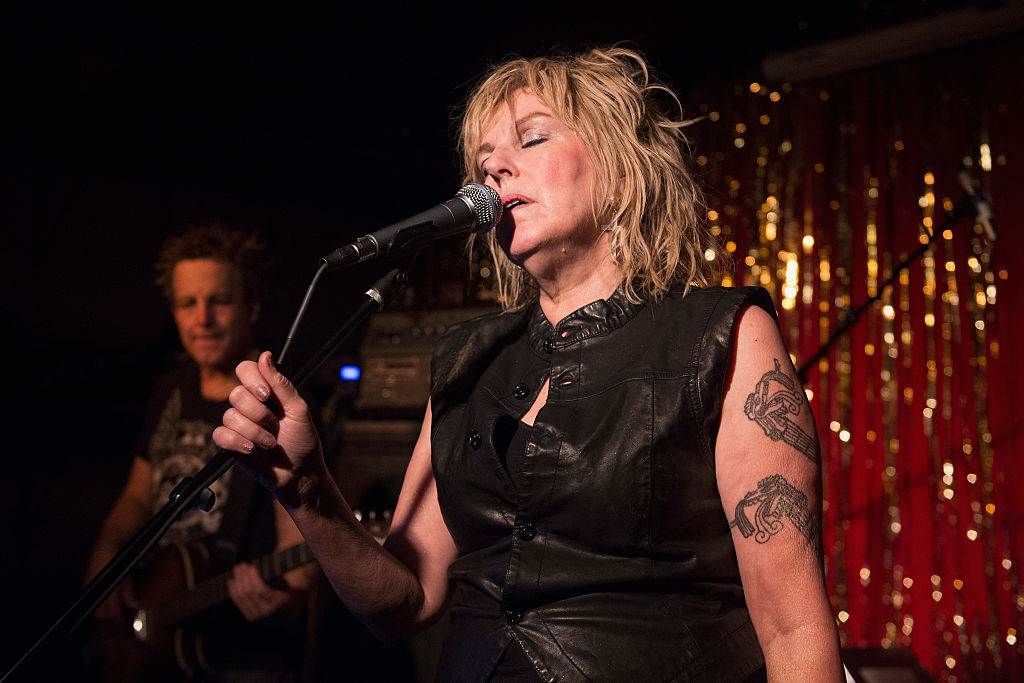
“It’s a special song,” says Lucinda Williams. “It came to me almost like a dream.”
Making the 1998 album on which “Car Wheels On A Gravel Road” became the totemic title track, however, was something closer to a nightmare. “The album was a total clusterfuck,” laughs Williams. “Let’s go ahead and say it!”
Featuring a walk-on cast that includes Steve Earle, E Street Band member Roy Bittan, Rick Rubin and Emmylou Harris, Car Wheels On A Gravel Road burned through six years, four producers, three cities, two record labels, and engendered a bitter split with Williams’ long-term musical partner, Gurf Morlix. Even when it was done, a series of legal tussles delayed its release for a year.
When it eventually emerged, the album won a Grammy and was almost immediately hailed as a landmark in Americana. An evocative scrapbook of people and places, its reputation has only grown with the years. “That album brought it all to a head,” says Charlie Sexton, who played guitar on the record.
“It’s like her first novel, really, where it all came together in the writing.”
A crunchy blend of country, rock and R&B, the title track provides a lightning rod for the album’s themes. “Car Wheels On A Gravel Road” is a deeply personal Southern Gothic travelogue, humming with memory and loss, the resonances of a transient childhood, the voices of Loretta Lynn and Hank Williams, “cotton fields stretching miles and miles… telephone poles, trees and wires”. At the centre of it all, a five-year-old sits in the back seat, looking out the car window, “dirt mixed with tears” on her face.
“The strange thing is that, on a conscious level, I didn’t realise I was writing about myself,” says Williams. “I was living in Nashville at the time and my dad was in town and came along to a show at the Bluebird Café. He came up afterwards and started telling me how sorry he was. I said, ‘What do you mean?’ He said, ‘That song you sang? You’re the child in the back seat looking out the window, a little bit of dirt mixed with tears. That’s you. And I wanted to tell you that I’m sorry.’ When he said that I was surprised. I knew on some level it was me, but I wasn’t fully aware of it.”
Since last year Williams has been touring the album to mark its 20th anniversary, but she continues to look forwards. She’s working on a book, “and I’ve got a bunch of new songs I’m really excited about”. Thankfully, the wild ride on Car Wheels… didn’t put her off. “Oh, no way,” she drawls. “We need to get back in the studio!”
GURF MORLIX: I spent 11 years working with Lucinda. First as bass player, then as lead guitarist and harmony singer, and finally as band leader, producer and touring partner. I produced the Lucinda Williams album and Sweet Old World. I was the designated producer for Car Wheels… – until the wheels came off. Lucinda played me the songs, and I knew [the title track] meant a lot to her. I could pick up on those feelings and come up with a sympathetic guitar line.
LUCINDA WILLIAMS: That song came about in such a strange way. There was a certain amount of stream of consciousness involved. I would wake up and have an idea for it, and jot something down. In the end it was like looking at a photo album. Like a travelogue, moving between the past and the present.
ROY BITTAN: It’s so evocative. That sound it describes resonates with anyone outside of the urban environment – somebody pulling up in a pick-up truck, driving on crushed stone. It immediately transports you to a place that sets the stage for the type of memories that she conjures up in the song.
CHARLIE SEXTON: The album is like a little novel, like Flannery O’Connor, and that song makes sense as the title track, because it encompasses a lot of that. It’s very visual, very poetic, very steeped. It’s almost as if every bug that hit the windshield is represented. It talks about the cotton fields; Louisiana, Macon, Mississippi.
MORLIX: We cut at Arlyn Studio in Austin. Basic tracks went pretty easily. Overdubs were mostly a breeze. It was when we got into the vocals when things started getting difficult. It became a chore, and she was getting more and more unhappy. I think she lost perspective. It got bogged down in the mud. Finally she decided that she wanted to start over, in Nashville, with Steve Earle producing.
WILLIAMS: It’s called growth! I didn’t want Car Wheels… to sound just like Sweet Old World. At this point we had rough mixes of all the songs. It was close to being ready to go. Then Steve asked me to come in and sing on “You’re Still Standin’ There” on his new album, I Feel Alright. He was recording with Ray Kennedy at Room & Board at Nashville.
RAY KENNEDY: She said it was the most fun she’d ever had in the studio. She lived around the corner from me, so it was easy.
WILLIAMS: Steve gave me a copy of his rough mixes, and I liked the sound of his album better than mine; it sounded bigger and better. I played Steve’s mixes for Gurf and he said, “I hate these! This sucks, there’s too much compression.”
STEVE EARLE: There was a lot of compression: the cheap sunglasses of the ’90s! We were just trying to make it sound like the music we grew up with.
WILLIAMS: Steve said, “If you want, come in with Ray [Kennedy] and me and recut the tracks you’re having trouble with.” We went in with the same band and recut a couple of tracks, and they sounded so great. It just sounded like it sounded in my head, so we recut everything. Gurf was pissed. He left in the middle of everything – and didn’t come back – but he’s on there, doing some great work. Nothing survived from the Austin sessions. I don’t even know where they are. Gurf still claims to this day that they’re better.
MORLIX: About half of what we recorded in Austin is way more beautiful and elegant than the final product, in my opinion.
KENNEDY: We wanted her to sing live with the band. I told her that the more live the record can be, the better chance there is to catch some magic. She was a little nervous about it, I think. She had never recorded live vocals with the band.
EARLE: The whole deal about Lu wanting to work with us was about the way her vocal sounded. The problem in Austin had been trying to get final vocals that anyone was happy with, and I didn’t want to stumble over that again. She would go to the bathroom and stay in there for a long time, because it was terrifying for her.
WILLIAMS: Steve had just gotten out of prison. He was in don’t-fuck-with-me bulldog mode, and I was, Waaaaah! So intimidated. I was still real shy and self-conscious about every little note. It wasn’t that I was a perfectionist, it was just that I was scared. I was driving him crazy because I was so unsure of myself. One time he snapped at me: “Lu, when are you going to learn to trust somebody?” Another time he said, “It’s just a record, get over it!” He had confidence in me, but he was a little brusque about it!
EARLE: I learned something from that: it’s not your record, it’s the artist’s record.
KENNEDY: Steve and I work pretty quick. I think it took five or six days, cutting three songs a day.
WILLIAMS: Steve hadn’t initially planned on doing this, and he had a tour coming up. Everything was pretty much done, but I wanted to bring in Emmylou Harris to sing, I wanted Jim Lauderdale…
EARLE: I was just a year out a jail, I owed the IRS a lot of money, I had alimony to pay. I had to work, and there was always a deadline to when I had to finish the project because I had a tour coming up – and we missed it. We didn’t get finished in time. Some political things happened, so they decided they wouldn’t wait for me. Also, I said something in the press. I had just produced a woman called Cheri Knight, and I said I wasn’t going to produce girls any more. It was a joke, and it didn’t really have to do with Lu in particular, but somebody repeated it to Lu. That pissed her off, I think, when she heard it out of context. I think it was done on purpose, because they wanted to move it along and get the record finished. That’s my understanding of what happened.
WILLIAMS: Steve and I started butting heads. John Ciambotti, the godfather of my band, had a connection with Roy Bittan, because John’s daughter was out singing background with Bruce [Springsteen].
EARLE: John’s daughter was Roy Bittan’s partner. Read into that what you want!
BITTAN: At some point, Lucinda wasn’t happy with something that was going on. John Ciambotti called me up and said, “Lucinda is having a tough time finishing this record. Maybe you can come in and help move this along?” So I went down to Nashville, packed up all the master reels, and shipped them to LA.
WILLIAMS: The meat and potatoes of it was done with Steve and Ray. The soul of it. In LA, we didn’t recut tracks, we just added a few things and fixed some things that Roy didn’t like. Emmylou came in, Lauderdale came in, Charlie Sexton came in.
SEXTON: I played for Lu the first time when I was 11 years old! We hadn’t really played together at all since that one night in Austin in 1979. In LA, there were just these little bits and pieces to add. There was something she wanted and she just hadn’t got it yet. It’s like the elements of the earth – she needs to feel or taste a certain something against what she’s singing about. Rumbo was the Captain & Tennille studio, this strange nautical place.
BITTAN: We went track by track and redid parts; on a couple of occasions we went down to bass and drums and recut. I tried as best I could to realise what her visions of the songs were. We spent quite a bit of time doing that, and got to a point where she was really pretty happy.
WILLIAMS: Finally, the album was done, mixed and in the can, and it was held up for an entire year. There were problems with my new label, American Recordings. Rick Rubin was changing distribution and the label had ceased to function. It was insane. Attorneys everywhere. Eventually, my manager Frank Callari just called Rick – they went back a long way – and told him, “Look into your third eye, man, and do the right thing!” Lo and behold, it worked. Rick let the album go, we made a deal with Mercury, and it finally came out. In my mind the album didn’t take that long, but of course I’ll never live it down: how it took so long, it’s all my fault, I’m a perfectionist, blah, blah, blah – but nobody knows all this stuff that went on.
BITTAN: It was a terribly difficult process for her, but the record is really a masterpiece. It’s a complete, holistic work. I was very lucky and honoured to be involved.
MORLIX: The experience was so painful that I have a hard time listening to Car Wheels…, even though I stand behind every note I played.
EARLE: I don’t know whether Gurf’s original version, or my version, or Bittan’s version would have been any more or less important than the version they released. It still would have been these fucking songs. It’s not about producers – it’s all about Lu and these songs. And the title song is one of her best. She writes her ass off.
WILLIAMS: On this tour, we’re playing the album in sequence. I talk about the songs, and we have a screen showing video and photographs. “Car Wheels…” starts with a video clip of us travelling somewhere. It’s from about 1969. I would have been 16, with my long hair, big smile, wearing a jacket with protest buttons on it. The car is piled down and we’re pulling a trailer, leaving somewhere again! I’m rolling up a sleeping bag with my dad, we’re putting suitcases in the car, then the car pulls away, loaded down, my brother and sister waving. It really takes me back. That song came from way deep inside, like the inside pages of your diary.
The post Lucinda Williams: “I didn’t realise I was writing about myself” appeared first on UNCUT.