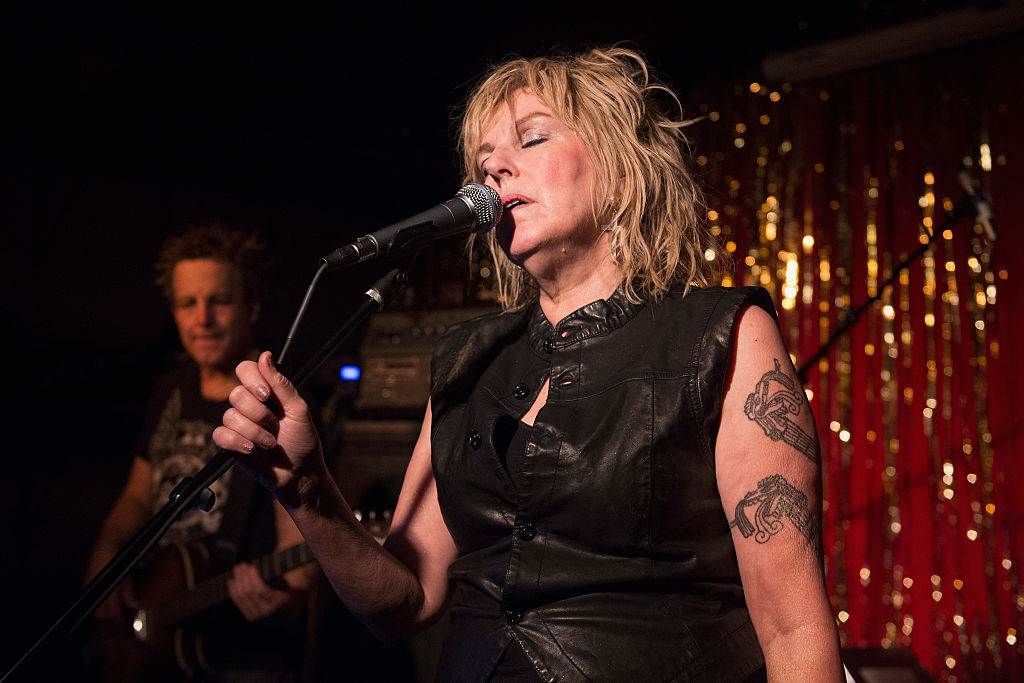
Lucinda Williams’ World’s Gone Wrong reviewed: compelling, compassionate state of the nation address
Lucinda Williams made her name some way back as a chronicler of ordinary lives and a confessor of romantic travails. Over the years her music has toughened and her vocal tone hardened into the remarkable instrument we hear today. Yet she has always written with such lyrical economy, influenced by her father, the poet Miller Williams, and authors such as Flannery O’Connor, who led the way in capturing the Deep South environment of her childhood. Now Williams is the artist many look towards to chronicle their milieu.
Lucinda Williams made her name some way back as a chronicler of ordinary lives and a confessor of romantic travails. Over the years her music has toughened and her vocal tone hardened into the remarkable instrument we hear today. Yet she has always written with such lyrical economy, influenced by her father, the poet Miller Williams, and authors such as Flannery O’Connor, who led the way in capturing the Deep South environment of her childhood. Now Williams is the artist many look towards to chronicle their milieu.
Her purpose was curtailed, but only briefly, when she suffered a stroke in November 2020. Always a ballsy player, she dug right into rehabilitation and was touring again within a year. Weakened down her left side and unable to play guitar as before, she drafted in former Black Crowes guitarist Marc Ford to her superb band and switched up her composition style.
She and husband/manager Tom Overby have developed a co-writing relationship which has flourished across her most recent albums and she has kept her considerable chops up with Lu’s Jukebox, a pandemic-birthed series of live tribute albums to the music of Tom Petty, Bob Dylan, Southern soul and, most recently, The Beatles.
World’s Gone Wrong is not to be confused, she says, with World Gone Wrong, Bob Dylan’s 1993 album of acoustic folk and blues covers. There is no mistaking the mean electric charge of Williams’ rocking blues, but there is common ground: both collections are stuffed with songs both timeless and timely, documenting and responding to the travails and conditions of their day. And boy, does she have the fuel to light up these songs.
Even a cursory glance at the song titles on World’s Gone Wrong – “written with urgency” in spring 2025 – reveals her chief preoccupation: America and where it stands today. Williams’s natural impulse is to channel compassion, concern, empathy and anxiety in a batch of wise songs that know their past and present but refuse to crumple or compromise. One year into Donald Trump’s second term, Williams knows people need to feel their woes are acknowledged and understood, and more so, that they need hope for a kinder future.
She gets straight to the point on the title track. Crunchy guitar and tingling organ lay the scene for that voice, expressing a mix of worry, resignation and hope. “Things are gettin’ tight but it could be worse,” she reckons as she sketches out the stretched circumstances of a couple leaning in on each other for succour. The sentiments are general but it’s obvious what has inspired this lyrical line.
The music is straight and soothing, a band coming together in a rootsy salve as Williams returns to a favourite theme, deliverance through music. She addressed its healing power on previous album Stories From A Rock’n’Roll Heart, with poignant ballad “Where The Song Will Find Me” floating the notion of making yourself available to music. In this case, her protagonists are “looking for comfort in a song” and, sure enough, they find it (“let’s put on some Miles”). They might as easily put on some Lucinda. Few do solace and salvation better.
That said, “Something’s Gotta Give” is a darker, more brooding Southern rocker, concerned with the cost of breaking trust and the corrosive effect of festering anger (“no-one turns the page”). Williams is not afraid to call out the “division in these days” for what it is – rage, evil, danger – but she also uses the classic blues image of a breached levee, soundtracked by complementary stormy guitar and the anguished gospel supplications of rising country star Brittney Spencer on backing vocals. The musical squall abates to foreground the final verse, with Williams the doomsayer deliberately trailing off to leave the titular warning hanging in the air.
“Low Life” is a breath of balmy air after such oppression. This vivid vignette features Williams in her safe place, supping cocktails and digging the soundtrack at her local bar. Mickey Raphael’s guttural harmonica presages her request to “play Slim Harpo on the jukebox” and almost all is contentment and respite from the times. Scratch the surface though and there is a subtle undertone of chasing oblivion.
Williams goes for the jugular on “How Much Did You Get For Your Soul?”. This second-term follow-up to “Man Without A Soul” (from Good Souls Better Angels) couches “the oldest story ever been told” in blithe chiming rock’n’roll and strutting beat rhythms, with respected Nashville session singer Maureen Murphy joining the chorus of accusation on piercing, soulful backing vocals. Her barely veiled subject loves a deal and can’t resist horse-trading with the Devil. Could he learn from Robert Johnson or is that guy even on the Presidential playlist?
Next, she duets with the mighty Mavis Staples on Bob Marley’s evergreen “So Much Trouble In The World”. Together these two oracles of integrity take germane aim at egocentric tech oligarchs (“you see men sailing on their ego trips, blast off on their spaceships”), align themselves with the huddled masses and deliver Marley’s sage warning shot. The laidback reggae arrangement is infused with burnished blues touches, with Doug Pettibone leading the charge on wah-wah guitar and Brady Blade adding djembe to the rhythmic mix.
She delivers her own lessons from history on “Black Tears”, an overtly bluesy lamentation inspired by the 2019 commemoration of the 400th year since enslaved Africans arrived on American shores. Backing vocals echo indistinctly like voices from the past as she deplores “the dream is deferred and the churches are burning/When voices are not heard what the hell are we learning”. Yet even at her most plaintive, Williams is still a motivator: “we gotta keep looking for that mercy seat…”
She diverts to more impressionistic territory on “Sing Unburied Sing”, inspired by Jesmyn Ward’s 2017 novel of the same name. Williams responds to its Southern Gothic haunting with a soulful quavering defiance, holding on to those notes for dear life while Murphy and Siobhan M Kennedy provide the Greek backing chorus, Pettibone and Ford dig in and let rip, Blade batters those skins and Rob Burger is almost a ghostly visitation on organ.
Williams goes on to wrestle with faith on the subtle, prowling “Punchline”, discouraged by the way religion is weaponised and questioning unchecked suffering. She cautions against apathy on the ramped-up roots-rock of “Freedom Speaks”, cutting through the bullshit to personify Liberty as an aggrieved observer all too familiar with the waxing and waning of her worldwide fortunes, before ending the album on a note of fortitude. “We’ve Come Too Far To Turn Around” features Norah Jones, the vocal silk to her salt, joining this musical march of pilgrims, weary but resolute, counting the years of standing up to diabolic oppression but ready for another push. As Williams declares “we are here to bear witness to this monstrous sickness”, she is engaged in nothing less than a battle for America’s soul.
When you purchase through links on our site, we may earn an affiliate commission. Here’s how it works.