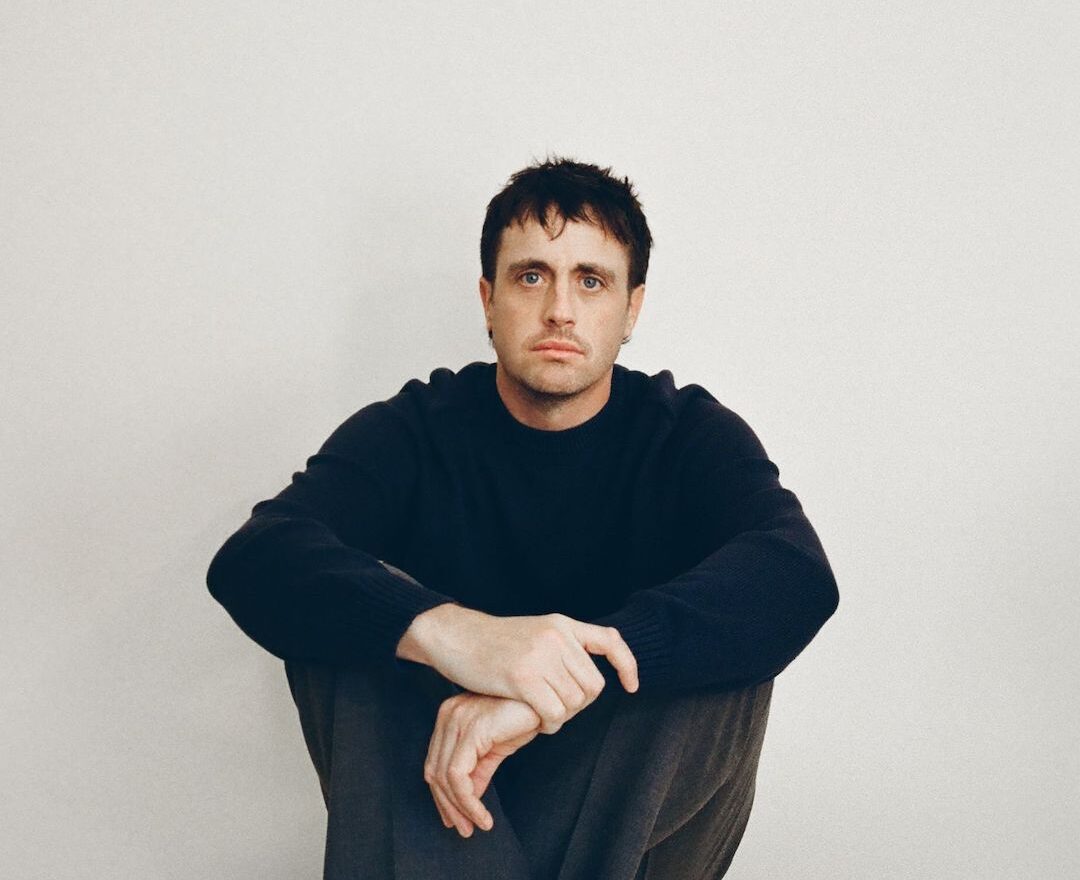
Originally published in Uncut Take 230 [July 2016], Paul Simon sat down with Uncut to discuss a revelatory new studio album (Stranger To Stranger), adventures in the folk clubs of London and the Gracelands of South Africa and the enduring legacy of Simon & Garfunkel…
Originally published in Uncut Take 230 [July 2016], Paul Simon sat down with Uncut to discuss a revelatory new studio album (Stranger To Stranger), adventures in the folk clubs of London and the Gracelands of South Africa and the enduring legacy of Simon & Garfunkel…
In 1964, Paul Simon visited the UK for the first time. “It was very exciting,” he says. “The Beatles, Carnaby Street. Mods and rockers. It was the centre of… well, you know exactly what it was. It was incredible.” Back then, he was an unknown folk singer, plying his trade in small, smoky pubs and clubs. 52 years later, however, and Simon’s circumstances have changed considerably. Today, aged 74, he has taken up temporary residence in a series of interconnected suites in Claridges.
“Don’t mind me, I’m just wandering,” he says as he pads softly along the corridors, peering into rooms whose furniture has been removed to accommodate visiting TV crews or to house a makeshift office for his management team. His clothes are unprepossessing – a navy jumper, jeans, black shoes – apart from a lilac baseball cap with “Timothy Dwight College Yale University” stitched across the top (a souvenir of a recent talk he gave to students there) and a green pendant that hangs round his neck on a leather cord. “I got it when we played in New Zealand,” he says. “It’s a Maori piece, it’s jade.”
Simon is about to release Stranger To Stranger, his 13th solo album, co-produced by Roy Halee, a collaborator since the Simon & Garfunkel days. A typically spry collection of songs, this new record incorporates African woodwind, Peruvian drums, electronic beats and Harry Partch’s fabulous menagerie of experimental instruments. One song details Simon’s meeting with a Brazilian healer, another addresses his experiences performing at the funeral of a teacher killed in the Sandy Hook school shootings, while a third is a tribute to Cool Papa Bell, a centre-fielder in the Negro League baseball from 1922 to 1950s. The album began, admits Simon, “in a season of emotional winter. Barren landscape, no ideas, anxiety about no ideas, lethargy spreading to increased caffeine consumption.”
As Simon explains, his talent is more the patient and painstaking kind. “One of my ways of writing is for me to sit with a guitar and find an interesting guitar chord or series of chords or something, anything, to just begin,” he explains solemnly. “The real game is, can you make something that’s interesting enough, entertaining enough, intriguing enough that the listener will listen again?” Simon has always written slowly, but after the failure of 1980’s One Trick Pony, he suffered from a prolonged bout of writer’s block. Even now, he acknowledges that “the urge to create is stirring, but nothing comes of it.”
Simon’s speech is careful and considered, characterised by brief pauses while he composes his thoughts. But he’s also capable of moments of great levity. At one point, he mugs shamelessly, recalling the kind of put-up schlub played by Larry David in Curb Your Enthusiasm. He talks animatedly about the genesis of “The Sound Of Silence” (which celebrates its 50th anniversary this year), the end of Simon & Garfunkel and the Graceland controversy. He speaks fondly, too, about the British folk scene of the 1960s – a pivotal time, he claims, every bit as significant as its storied American counterpart. “I always feel good here in London,” he says. “Even though everything’s changed so much. When I drive through the streets, I think, ‘I used to walk round here…’”
Taking a seat, he twists the cap off a bottle of water and considers the enduring qualities of his craft. “The music keeps growing,” he says.
How do you feel when you’ve finished an album? Are you happy to let it go, or do you struggle to stop tinkering?
I’m a let it go guy. I’ve been listening constantly for years and years. I don’t see any point now in going back and listening again more intensely. I’m more likely to make a mistake if I make any changes now. I’ve had plenty of time to correct my errors. In five years, I’ll listen to this and say, “Oh, I should have sung it that way. I should have done this, I should have done that.” But that’s what you do on live tours. Even though you’re repeating the same songs, they get better. If you’re paying attention. If you want them to get better.
How do you write these days?
I have a little cottage, that’s my studio. I often write in my car, when I’m driving along listening. Just a word of advice for anybody who’s driving near me: you’re making a big mistake. When I’m in writing mode, I’m writing all day long. It’s what I’m thinking about before I fall asleep. It’s not like something else doesn’t take my attention, like I have to go and pick up my youngest, or you have to go shopping, or whatever. But for the rest of the time, I’m thinking, “This line, that line, maybe it would be better that way, maybe this would be funny…” It’s pretty intense and it goes on for usually about three years. By the time I’m finished, I’m finished.
You’ve always been open to different sounds, and you used the Harry Partch instruments on this album. Do you have a favourite?
Oh, they’re fabulous. It depends on what you’re using them for. Maybe the Cloud Bowls. They’re so magical. You can play them and hear what it is. The Chromelodeon, it doesn’t play what you think it’s going to play. But the Cloud Bowls are so beautiful, the overtones and how they ring against each other. They are also physically beautiful to look at.
You collect unusual percussive instruments, right?
I divide the rhythm instruments into skin, wood and metal. If I hear a shaker that’s really nice, I’ll get it. So I have a lot of different shakers. The same with the metal. I particularly like West African instruments. They have a nice rawness. When you hear a sound that you like, it it’s for sale, I’ll buy it. I don’t know where to put it, but I’ll buy it.
Is the cottage full up, then?
With racks and racks of guitars, yeah. The space is big enough and they’re put in their shelves and there’s a big iron gate that comes down and the room is humidified and locked and fire proofed, and all of that stuff. I even have the guitar that I wrote all the Simon & Garfunkel songs on. There are two of them. One of them is in the Rock’n Roll Hall Of Fame and the other one I turned into a high string guitar. It’s beautiful. I still use it sometimes, yes.
Stranger To Stranger is dedicated to Mort Lewis, Simon & Garfunkel’s manager. What kind of man was he?
He just passed away, at age 92. He was my old friend. A great guy, a really great guy. He started managing us right at the beginning.
What do you think he saw in you?
He was a jazz guy, he was managing Dave Brubeck. We had a No 1 record by the time we met him, “Sound Of Silence”. A lot of people liked Simon & Garfunkel, so I guess he saw what people saw. He was a funny guy, honest. Many, many years passed and we still remained friends. We lived not too far apart so occasionally we would have dinner. He loved to tell jokes. He was one of my main source of jokes. People stopped telling jokes, people don’t tell jokes anymore.
Tell us a joke, then.
Tell you a joke? Let’s see. What can I give you? Here’s one of them. This guy’s got a cat. He’s absolutely dedicated to his cat. His brother says to him, “Your life is totally dominated by the cat. Why don’t you just take a trip to Paris for a week? I’ll take care of the cat, he’ll be fine.” So he leaves specific instructions how to take care of the cat. Flies to Paris. Next morning, the first thing he does is call his brother. “Hi, I’m here. How’s the cat?” “Oh, the cat. The cat’s dead.” “What? Oh, my God. I can’t believe it. What kind of way is that tell somebody news like that?” So the brother says, “How am I supposed to tell you?” He says, “You do it gradually. ‘The cat is on the roof. But it’s fine. The fire department are coming so there’s absolutely nothing to worry about.’ Then the next day you say, ‘The cat fell off the roof but fortunately he landed in a tree. He seems to be settled. The police are coming to get him.’ Then the next day, ‘The cat fell out of the tree, broke a leg. But we got the best vet we could. He says no problem, he can set the leg. He’ll be fine.’ Then the next day you say, ‘We gave him anaesthesia, we did everything we could, but we just couldn’t save him.’ That is how you tell somebody a thing like that. But forget it. How’s mum?’ So the brother says, “Mum is on the roof…”
I’ve always wondered whether there was much crossover between the stand-up comedy, jazz and folk scenes in New York in the 1950s and Sixties…
Yeah, there was! Lenny Bruce and jazz, the Kingston Trio and folk. My father was a musician, so there was always this musician humour going around. I was funny anyway when I was a kid. Artie was funny too, that’s why we became friends. We had the same absurd sense of humour. That, and we were the only two guys in the neighbourhood that wanted to sing. So there was a connection at the time. But it’s long gone now and as I say, people don’t tell jokes anymore.
Did you see Inside Llewyn Davis?
No, I skipped it. I heard it was terrible. It was based on Dave Van Ronk, who I knew. But they didn’t. I like the Coen brothers, I think they’re really good – really good – but I figured, you’re never going to get Dave Van Ronk right. He was a real character, and they’re going to try and capture the folk scene and they’re not going to get it and I’m going to look at it and say, “That’s not how it was.” A funnier film on that subject is A Mighty Wind.
You were in Annie Hall…
Yeah, Woody Allen asked me. It was fun. I’d get my lines and I’d say, “You want me to play this rock’n’roll producer, but that’s not the way he’d talk.” So he’d say, “Say whatever you want but just make sure that you end it with, ‘Come on back to our hotel room because it’s going to be very mellow.’ Make sure you get that in – ‘It’s very mellow’ – because my joke is based on ‘It’s very mellow.’ But otherwise just say whatever you want.” That’s what I did. That was it.
Talking of record producers, you’re back with Roy Halee on this album. Do you remember the first time you worked together?
He did the audition tape for Simon & Garfunkel for Columbia and our first album. What do I remember about doing that audition tape? Just how nervous we were, hoping that we would be signed. We were quite proficient by that point. We’d recorded when we were kids. We did a couple of solo records. I used to do demos for lots of people. Instead of working as a waiter or something like that, I would do demos. Burt Bacharach. Carole King and I used to do demos for other people. Anybody. I think my fee was $50 for an hour. So if I could do three demos a week, that was all the money I needed. I was living at home, so I didn’t have to pay the rent. Buy gas for my car, go out on a date, buy whatever clothes I wanted. Meanwhile, I learned how to use a microphone, overdub. Basically, how to record.
Roy was with you on the first solo album, too.
Yeah, Phil [Ramone] did a bunch of the first one and so did Roy. Roy left to go and do Artie’s solo albums. The three great engineers at the time were Phil Ramone, Tom Dowd who was down in Miami and Roy Halee, who worked exclusively for Columbia. After Simon & Garfunkel broke up, there was a competition for who was going to get Roy. After my first solo album, Clive Davis said, “Artie gets him.” So I went to Phil. Phil made There Goes Rhymin’ Simon, Still Crazy After All These Years, One Trick Pony.
How do you view that run of albums now?
Good. They’re good albums. There Goes Rhymin’ Simon was a very happy album, a joyful album. It was done with the Muscle Shoals rhythm section. That was great, to go down to Muscle Shoals and work with those guys, they were fantastic. I brought Revered Claude Jeter with me, who sang with the Swan Silvertones, who were my favourite gospel quartet. Part of the inspiration for “Bridge Over Troubled Water” came from that quartet. We drove from the airport down to Muscle Shoals, it was a two or three hours drive, and he’d tell me what it was like to tour in the South as a gospel quartet in the late 40s and early ‘50s.
“American Tune” is one of the great songs from that period.
“American Tune” was done by an English producer. Paul Samwell-Smith. The melody is pre-Bach, but Bach took it but made the glorious, famous piece that I learned it from. I had enough nerve to go and write a bridge for that…
What was the inspiration for the lyrics?
Nixon won.
That’s it?
Yeah, that’s it. But it’s interesting that those songs have lasted. I’m not bragging about it. I find it pretty amazing. Bernie Sanders used “America” for his first political ad, and it was a big hit – as an ad, I mean. He won the Iowa caucus. I was glad to give it to him, because I thought he was a real stand-up, tell-the-truth guy. What I found personally interesting and pleasing, even flattering, was that a song that old would still have that emotional effect 40 years later. Same with “Sound Of Silence”, which is older. I was 21 when I wrote it. Same with “Boy In The Bubble”, which is quoted in today’s Wall Street Journal.
Why do you think that is?
I guess for some reason, those songs didn’t become dated and corny and nostalgic.
You came to Britain in 1964. What were the stand-out qualities of the English folk scene?
Yeah, the English folk scene was as good as the American folk scene. Some of those players were really good and charismatic. We were on the same circuit, and we all lived around the same place. Around that time I was living around Belsize Park, so it wasn’t too far away from where Bert Jansch lived or John Renbourn. I knew Sandy Denny, Jackson Frank. Martin Carthy – I rented Martin’s flat in Belsize Park. £7 a week.
What was the circuit like at that time?
Mostly you played in some room above a pub, where they set up some chairs. Maybe they had a microphone with speakers, or maybe they didn’t then you sang without it. Or there were clubs. There was a club in Soho they called Les Cousins. That was my home club. I played there more than other places. When I went up north, I played in Widness and Warrington. It was around there, one of those railway stations, that “Homeward Bound” is about. You slept on a couch. Whoever ran the club let you sleep on their couch. You saved money. I used to get paid around that time maybe £15 a night, which was considered pretty good. Then right before Simon & Garfunkel hit, I got up to £20, £25 a night. At the time, the average working man’s salary was £37 and sixpence or something. £37 essentially. So here I was making maybe £75 – £80 a week as a kid.
What did you spend it on?
Nothing! Taxis instead of taking the tube. I moved out of Belsize Park into a flat that had a bathroom in it. But I never was as happy as when I was at Belsize Park. I didn’t spend it on anything because I didn’t need anything or want anything. “The Sound Of Silence” hit and all of sudden, we had made a million dollars. But to me, it was like, ‘I know you think £20 a night is a ridiculous amount of money but I’m actually good now and I’m worth it. So I don’t feel guilty at all!’ [laughs]
What do you remember about writing “The Sound Of Silence”?
I wrote it in the bathroom in my parent’s house because the room was tiled, so there was an echo. I used to turn the lights off and leave the water running. It was like white noise, you know? My brother says it was amazing that I wrote it, because everything I’d written before that was way below it in quality. It was step up. It was probably one of those things when you’re in some kind of serotonin/dopamine flow, and it just comes out. But I was too young to know that those things happened. So I just took it as, “That’s a good one, I could close my act with this one.”
It’s 50 years old this year. Do you get sentimental about anniversaries?
I don’t know, I don’t think about any of these as big anniversaries. I don’t celebrate them, I don’t have any significant emotional attachment to any of the anniversaries or any of it, other than a very warm feeling about when I lived here. A kind of nostalgia, but I’m not actually very prone to nostalgia. Certainly not about my own stuff. If I hear a record that I liked when I was a kid, and I hadn’t heard it in a long time, I could get that pleasure of nostalgia.
Can you still identify with the 21 year old Paul Simon who wrote “The Sound Of Silence”?
I remember I was just coming out of the phase where I was playing baseball for the schools that I was in. I was a good baseball player but I said, “Realistically, you’re never going to be a baseball player. You’re too small to be a baseball player. That’s over.” I know that I had a tremendous interest in making records as I did all those demos. I was an English Literature major in college, which I chose as my major because I had a crush on a girl who was an English major. But I just liked playing music, I wanted to do that. I never envisioned that it would be a lifetimes worth of employment or that I would ever be having an interview like this, at this point.
Were you ambitious at all?
Yeah, I was. I wanted it. Also, I was competitive. I was competitive as an athlete. But there were no huge obstacles that I was facing other than I didn’t have a hit. But I wasn’t struggling. As a said, when I lived here I had tons of money for what I needed. When you’re a kid and you’re 21, 22 years old, unless something’s really gone wrong in your life, you’re pretty happy.
When you say you were competitive, was it convenient then that Art wasn’t the songwriter?
I didn’t think of it that way. I was best friends with Artie. He wasn’t competitive with me. We were signed together. I really thought of us as a duo, and as a group, and that was fine. The Beatles were a group. But I do remember thinking, when Sgt Pepper came out, ‘I can’t believe that somebody is so much better than I am, that they are so far ahead.’ But anyway, whatever. Artie and I were fine until “Bridge Over Troubled Water” and the movies. We were fine. The movies broke up Simon & Garfunkel, really. But we would have broken up anyway because Artie thrives on big ballads and I like to write rhythm and Artie doesn’t like to sing rhythm. The thought of having to write a “Bridge Over Troubled Water” every album is too daunting, given what happened with “Bridge Over Troubled Water”. Anyway, I wanted to go to Jamaica and record ska, all kinds of stuff that I wanted to do that he didn’t have any interest in doing. So he went his way and sang the songs that he wanted to sing and I began doing what I like to do. It would have happened anyway because that’s who we were musically. Then a couple of times when we came back together, some of it was lousy and some of it was nice.
Which were the nice ones?
When the Everly Brothers were there, we had a great time. I think it was 2003. We did another, after that. But that wasn’t fun. Anyway. As it turns out, I had a lot on my mind, musically. As it turns out. I didn’t set out saying, “I have a lot that I want to accomplish.” It just grew as I went from stage to stage. Albums would take leaps. Like “Still Crazy After All These Years” was a leap. It was harmonically way better than what I had written before. It was a really good ballad with a really good title. I loved recording with the gospel quartets, I like going to Jamaica, I like travelling around and meeting other musicians. So the idea of recording in South Africa for Graceland didn’t seem intimidating. It felt like, “Well, I did it in Jamaica. I don’t know what it’ll be like, but it’ll be something akin to Jamaica.” Which it wasn’t.
Talking of Graceland, how do you view the controversy surrounding the album now? You were accused of breaking a cultural boycott.
I don’t regret it. I didn’t start it. Look, first of all, that existed in Britain to a far greater degree than it existed elsewhere in the world, with the exception of South Africa. But in South Africa, the musicians answer was, “Hey, I don’t want to hear your criticism. I’m out there in the world, you know, playing our music and doing well. So who are you?” Finally the argument came down to, “We, the African National Congress, didn’t approve of you going to South Africa.” It wasn’t about a cultural boycott. There was no boycott that applied to recording with South African musicians. It applied to performing in front of segregated audiences or sporting events or political events. But it didn’t apply to recording. Probably because it never occurred to them that anybody was going to do it, although the year before Malcolm McLaren had recorded Duck Rock in South Africa. The musicians voted whether they wanted me to come and they wanted to know how much I was going to play them, because Malcolm McLaren didn’t pay them anything and he took credit. I paid them double New York scale, which was something like $600 a session, and they were making $10 a session. So they were happy to come in and play. So the whole experience of making that record was very exciting and very pleasurable for everybody. Nothing bad happened until it was a hit.
So what changed?
The political issue and implications came up. I was friends with Hugh Masakela and Miriam Makeba who stood by my side and said, “Who do you people think you are, attacking this? What did you ever do for South Africa?” So what it turned out to be really was an argument that said the politicians should be able to dictate to the artists what they can and what they can’t do and the artists spoke back and said, “Why? How come you get to tell us that we can’t do this? Based on what? How did you decide that we’re doing damage to your cause when in fact we’re actually doing good and you guys are upset because we’re not listening to you? Is that the kind of government that you’re going to bring when you come in?” So it became a real artist versus politics argument and I’m quite proud that we won.
You mentioned accomplishment a moment ago. Is there anything left for you to accomplish, do you think?
I don’t think accomplish is the right word. Is there anything left to learn? It’s infinity. There’s so much to learn that you’re never going to get there. Which is part of the great pleasure of it.
The post Paul Simon: “I was ambitious. I was also competitive” appeared first on UNCUT.