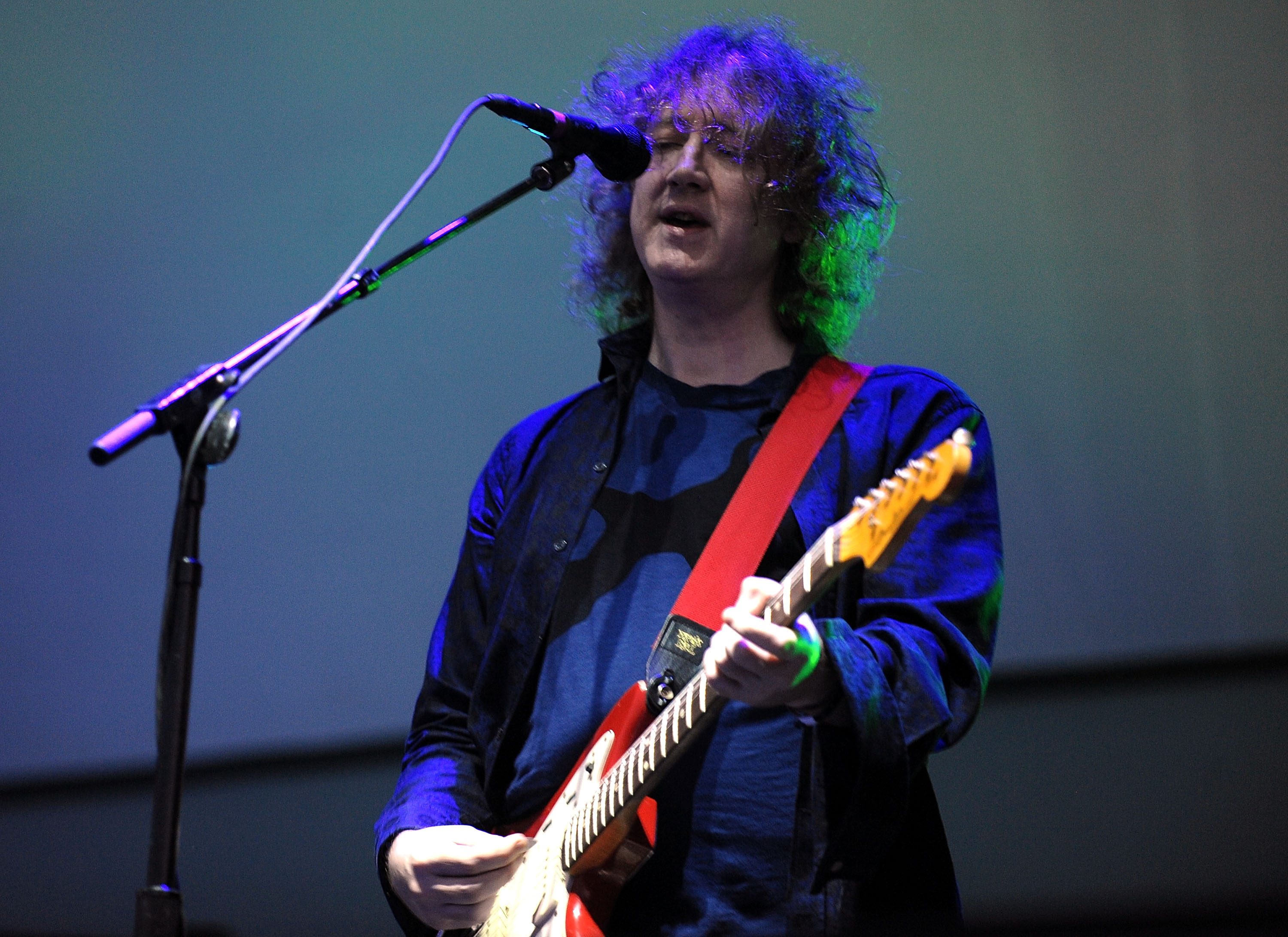
Soft Machine at 60: Full circle for the Canterbury Scene’s ever-evolving originals
Australian maverick Daevid Allen was a key conspirator in the first incarnation of the legendary Soft Machine, who came together in Kent in 1966. But before they could record their debut album, Allen left to form Gong in France, after being denied re-entry to the UK following a European tour. Now, a decade after his death, Allen makes a ghostly appearance with his old band.
Australian maverick Daevid Allen was a key conspirator in the first incarnation of the legendary Soft Machine, who came together in Kent in 1966. But before they could record their debut album, Allen left to form Gong in France, after being denied re-entry to the UK following a European tour. Now, a decade after his death, Allen makes a ghostly appearance with his old band.
“I was in Gong between 1999 and 2010,” explains saxophonist Theo Travis, who has also been in the Soft Machine fold for the past 20 years. “I recently uncovered a recording I made in 2001 of Daevid playing his glissando guitar, that technique he learned from Syd Barrett, where he plays a chord shape with his left hand and then scrubs the strings with a piece of metal with his right hand, playing through loops and delay pedals. So we built an entire track around that lovely sound, something that brings the Soft Machine story full circle.”
Over the past six decades, Soft Machine have been through more than 35 members in half a dozen different incarnations: whimsical garage rockers, psychedelic pranksters, Dadaist prog tinkerers, rigorous jazz-rockers and, under the de facto leadership of future knight of the realm Karl Jenkins, a neo-orchestral fusion project.
“There have been several very different Soft Machines,” affirms guitarist John Etheridge, now the band’s longest-serving member. “The Soft Machine I joined in 1976 was a Euro jazz-rock band who never played the earlier psychedelic stuff. When we reformed in 2004 with Elton Dean, Hugh Hopper, John Marshall and myself, we didn’t play anything from the Karl Jenkins era. But in the last few years we’ve made a semi-conscious effort to incorporate music from every era.”
As well as reviving the famous typographic logo from 1970’s Third – and featuring a tribute to former drummer Robert Wyatt by the latest occupant of the drum seat, Asaf Sirkis – Soft Machine’s new album Thirteen recreates the sound palette of earlier albums.
“There’s a strong Fender Rhodes presence, always put through effects pedals,” says Travis. “We use a Mellotron for that ‘Strawberry Fields’ sound on ‘Open Road’. And there’s a lot of textures, drones and freakouts that invoke early incarnations of the band.” Live, they have been revisiting earlier Soft Machine compositions, “all the way back to Kevin Ayers’ ‘Joy Of A Toy’ on the first album. We also do ‘Out-Bloody-Rageous’ and ‘Facelift’ off Third, ‘Kings And Queens’ off Fourth, ‘Gesolreut’ and ‘Chloe And The Pirates’ off Six, ‘Penny Hitch’ off Seven, ‘The Tale Of Taliesin’ off Softs, and more.”
“What’s different is that there was no guitarist for much of the band’s history,” adds Etheridge. “So we have to constantly rearrange and reinvent that old material.”
As well as leading their own jazz bands, Etheridge and Travis have played with dozens of musical legends between them. Etheridge’s CV includes work with classical guitarist John Williams and violinist Stephane Grappelli, as well as Danny Thompson, Hawkwind, Fairport Convention, Nigel Kennedy and Andy Summers; Travis has played with Robert Fripp, Bill Nelson, Gong, Porcupine Trio, Steven Wilson, Harold Budd and David Gilmour. Both maintain a commitment to improvisation rather than slavish re-creation.
“I’ve done a few of those prog rock cruises,” says Etheridge, “where some prog bands might recreate an entire album, almost note for note. Fans love it, and I understand that. But that would drive me insane! Having to recreate, say, every solo on Third or Bundles would be a technical challenge, but of no artistic value at all, for me. That’s why I love this band. It’s the best version of Soft Machine I’ve ever been in. It’s a perfect mix of precision and improvisation. Everyone pulls their weight, everyone is a phenomenal musician, everyone inspires me to get better, and everyone has eccentricities that contribute to the music.”
When you purchase through links on our site, we may earn an affiliate commission. Here’s how it works.