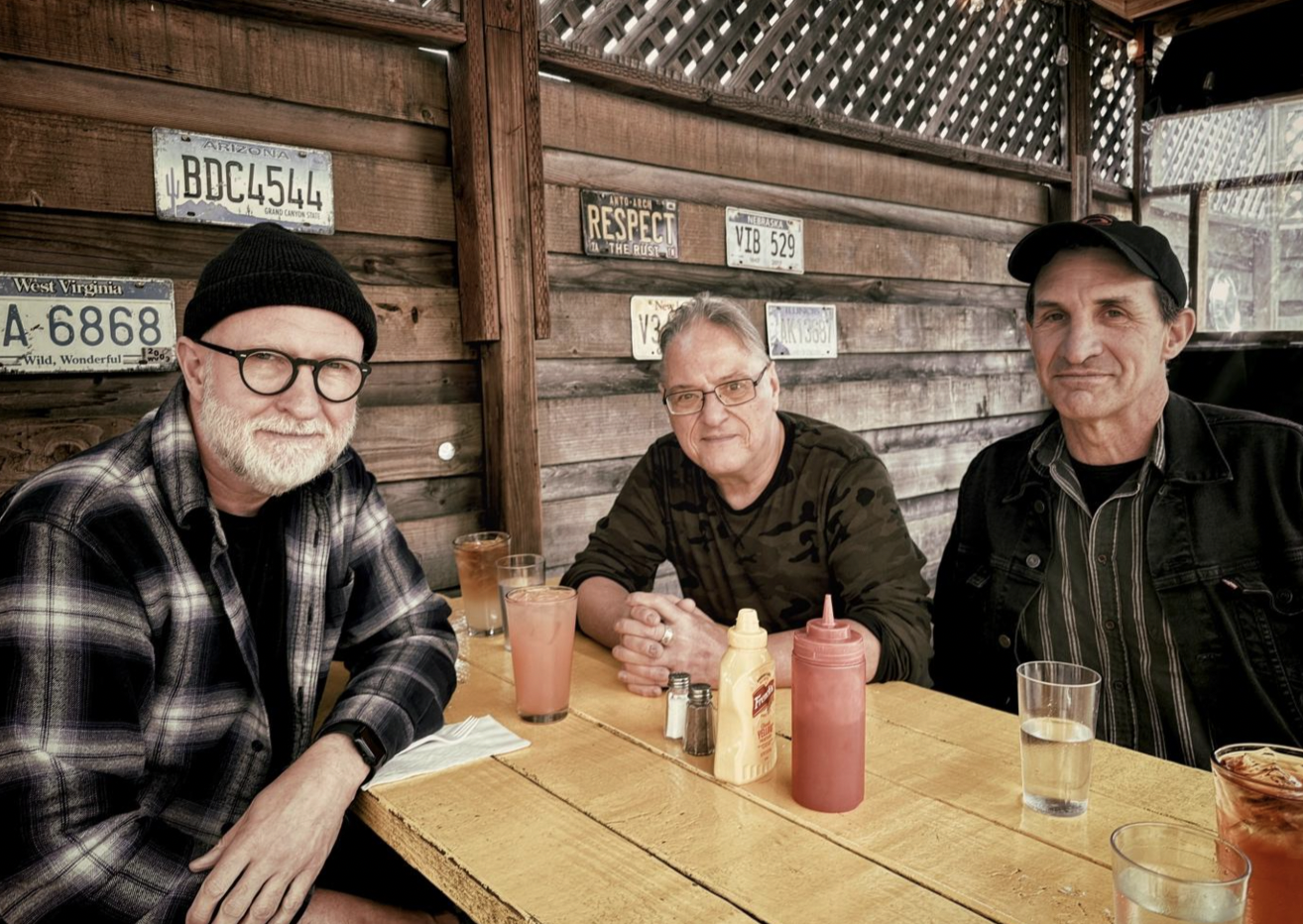
When Sugar’s debut album was released in September 1992, it felt like a full circle moment for frontman Bob Mould. Having exorcised some demons from his decade in Hüsker Dü with a couple of cathartic solo albums, he found inspiration in the bands he had influenced in the first place to produce his grunge era opus. Copper Blue was an agreeably meaty, eminently tuneful and turbo-charged collection of his most commercial music to date.
When Sugar’s debut album was released in September 1992, it felt like a full circle moment for frontman Bob Mould. Having exorcised some demons from his decade in Hüsker Dü with a couple of cathartic solo albums, he found inspiration in the bands he had influenced in the first place to produce his grunge era opus. Copper Blue was an agreeably meaty, eminently tuneful and turbo-charged collection of his most commercial music to date.
The Sugar high only lasted for three years, two albums and one EP, with Copper Blue clearly the crown in their catalogue. Mould marked its 20th anniversary at a live celebration with his band of the day but the time for a Sugar reunion wasn’t right. Now “the long pause” is over with the first sprinkling of new Sugar material in 30 years. The release of gruff, terse new single “House Of Dead Memories” heralds the announcement of reunion dates next May in London and New York.
Copper Blue – The Singles Collection makes a fine primer for those shows. This limited edition 4LP boxset gathers each of the album’s singles on individual 12-inch backed with three contemporary tracks, including B-sides and live recordings of most of the remaining album tracks, all captured at one Chicago show in July 1992.
The early ’90s was something of a reset for Mould. He had shaken out the trauma and chaos that led to Hüsker Dü’s demise with confessional debut Workbook and the electric storm of Black Sheets Of Rain. He was out of contract and touring with a live band was proving costly, so he headed out solo, playing acoustic shows along the East Coast and opening for Dinosaur Jr in Europe.
And he wrote. Having laid down the blueprint for melodic grunge rock through the ’80s, he was in turn inspired by Pixies and especially the irresistible tunefulness of Nirvana’s Nevermind – an album he was briefly in the frame to produce – to amass a trove of his most accessible songs to date. Creation Records honcho Alan McGee was enthusiastic as only he can be, and Mould was digging the audacious sonics of My Bloody Valentine’s Loveless, the album which almost bankrupted his new label.
He recruited bassist David Barbe and drummer Malcolm Travis after their respective bands broke up in order to record what he assumed would be his third solo album. The chemistry was there from rehearsal one and sustained through the studio sessions in early 1992. Mould helmed the desk alongside producer Lou Giordano, who had latterly served as Hüsker Dü’s live sound engineer.
Giordano elected to record the trio individually but any potential fragmentation in performance was belied by the final results, with 10 songs selected for the trim album, six grouped for follow-up EP “Beaster” and the rest finding homes as B-sides.
Debut single “Changes” could hardly be a more effective portal with its ringing intro, perennial theme of restlessness and questing, Mould’s grizzled delivery hinting at vulnerability (“now that winter has fallen upon us/I need something that’s warm and honest”) and a structure which did indeed change, pulling up the horses to dig in and riff mightily in the third act before collapsing in a woozy pile.
The “Changes” disc also features a delightful solo mix of “If I Can’t Change Your Mind” with buoyant rhythm guitar, a brief, deft solo and gleeful arpeggiated coda which paves the way for the meatier band rendition. Its yearning acceptance contrasts with the exuberant “Needle Hits E”, a melodic power rocker about fighting burnout. Mould works those fuel tank metaphors to offer the kind of hand-on-the-shoulder buck-up advice you would want from a buddy.
Completing this set, “Try Again” is a non-triumphalist survivor song. Bereft yet determined of spirit, it is a tonic to Nirvana’s nihilism as well as a clear musical nod to The Who, with its jangling crescendos, nimble bassline and galloping rhythm guitar. Turn to the 12-inch of “A Good Idea” for an athletic garage punk cover of “Armenia City in The Sky”, a freak anthem written by Thunderclap Newman frontman Speedy Keen but recorded by The Who as the opening track of The Who Sell Out.
“A Good Idea” itself is a Pixies song gone astray, a grim, fateful, pitch-black spin on the murder ballad – an assisted suicide grunge mantra, if you will. It’s paired with a sludgy live take on album track “Slick”, an anatomy of a literal car crash. There are “men in bars and girls in cars” in “Where Diamonds Are Halos”, Barbe’s twisted tribute to Springsteen in which a protagonist called Wilhelmina taking drastic action to escape suburban drudgery.
Other live highlights include a mean and ragged take on Copper Blue opener “The Act We Act”, pained end-of-life lullaby “Man On The Moon” and the anthemic “Hoover Dam” with Mould on the precipice, wrangling his guitar as if it’s part of the problem. However, he reserves his most potent vocal for “The Slim”, ravaged with emotion for those bereaved by AIDS, exposing the compassion of a man who was taking his own baby steps out the closet at the time. These are universal songs with emotional stakes, from a master taking chances and making his best work yet.
XXXX
The post Sugar’s Copper Blue – The Singles Collection reviewed: Bob Mould’s grunge classic revisited appeared first on UNCUT.